
Salads
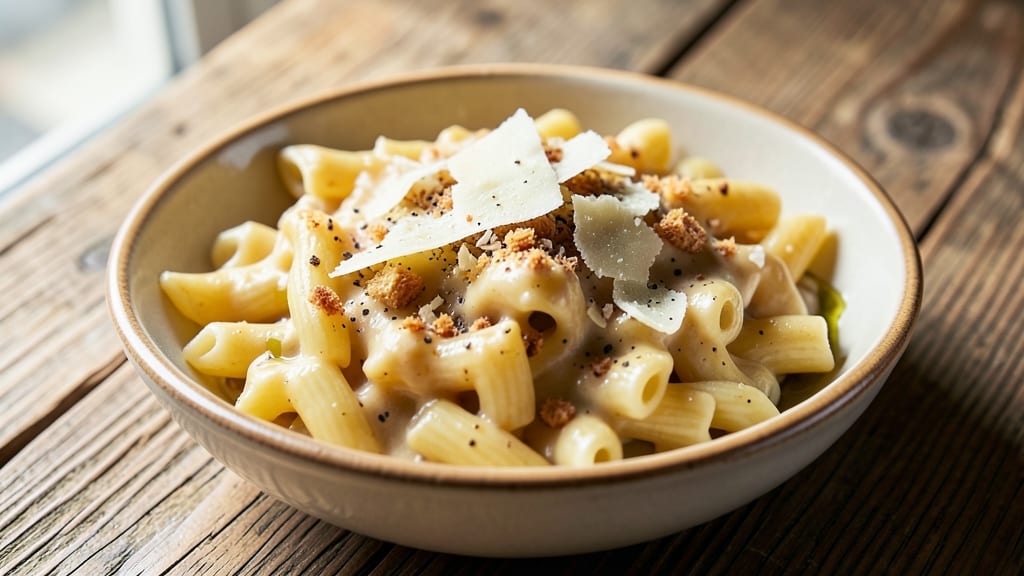
This authentic Italian macaroni and cheese recipe brings Roman comfort to your table with a rich, creamy sauce that clings to every strand of pasta. Unlike its American counterpart, this dish—often called maccheroni alla gratinata—prioritizes simplicity and bold flavors, using just a few high-quality ingredients.
The secret lies in a perfectly balanced sauce of butter, cream, and aged cheeses, finished with crispy breadcrumbs that add texture and depth.
Traditionally made with rigatoni or casarecce pasta (or even spaghetti in some regions), this dish transforms humble ingredients into something restaurant-worthy. The key is patience: letting the sauce simmer until thick and velvety, then topping it with golden, buttery breadcrumbs that create a satisfying crunch.
It’s the kind of dish that feels indulgent yet effortless—no heavy cream overloads or artificial flavors here.
What sets this recipe apart is its authentic Italian roots, where cheese takes center stage with Parmigiano-Reggiano and Pecorino Romano lending nutty, salty depth. The pasta absorbs the sauce beautifully, leaving you with a dish that’s creamy yet not greasy, crispy yet not burnt.
Serve it as a main course or a hearty side—either way, it’s a flavor experience that feels like a taste of Rome.
The best part? This recipe delivers restaurant-quality results in under an hour, with minimal cleanup. No fancy techniques required—just good ingredients and a little attention to timing. Whether you’re hosting a dinner or craving a cozy weeknight meal, this Italian macaroni and cheese won’t disappoint.
Ingredients for authentic italian macaroni and cheese
Twelve essential ingredients transform into Roman-style macaroni and cheese with perfect balance.
| Ingredient | Amount | Notes |
|---|---|---|
| Rigatoni Pasta 🍝 | 12 oz | Dried, high-quality preferred |
| Unsalted Butter 🧈 | ½ cup | European-style, cold for topping |
| Heavy Cream 🥛 | ½ cup | Full-fat for richness |
| Parmigiano-Reggiano Cheese 🧀 | 1 ½ cups | Freshly grated, block preferred |
| Pecorino Romano Cheese 🧀 | ¾ cup | Freshly grated, sharp flavor |
| All-Purpose Flour 🌾 | 2 tbsp | For sauce thickening |
| Freshly Ground Black Pepper 🌶️ | ½ tsp | Freshly cracked for intensity |
| Diamond Crystal Kosher Salt 🧂 | 1 ½ tsp | Adjust to taste |
| Extra-Virgin Olive Oil 🫒 | 2 tbsp | For crispy breadcrumbs |
| Italian Seasoned Breadcrumbs 🍞 | ½ cup | Panko-style preferred |
| Garlic Cloves 🧄 | 2 cloves | Minced for flavor base |
| Fresh Nutmeg 🌿 | ¼ tsp | Freshly grated, optional |
The cheeses are non-negotiable here. Parmigiano-Reggiano and Pecorino Romano must be freshly grated from blocks—pre-grated versions lack texture and depth. For the best quality, visit a specialty cheese shop or order online; Giacomo's or BelGioioso are reliable brands. The pasta should be rigatoni or casarecce for ideal sauce absorption, though spaghetti works in a pinch. If you can't find Italian pasta, De Cecco or Barilla are excellent substitutes. The butter should be European-style, like Plugrá or Kerrygold, for higher fat content and better flavor.
No heavy cream? Full-fat coconut milk works surprisingly well, though the texture will differ slightly. Substituting Pecorino Romano? Gran Padano is acceptable but less complex. For the breadcrumbs, Panko-style gives the best texture, but regular breadcrumbs toasted with olive oil and garlic will suffice. The garlic should be freshly minced—jarred garlic lacks the necessary depth. Nutmeg is optional but recommended; if unavailable, a pinch of cinnamon adds warmth. The flour is purely for thickening—don't skip it unless you're comfortable making a roux.
Grated cheese keeps best in an airtight container in the fridge for up to 1 week, while breadcrumbs remain crispy for 5 days if stored in a sealed container. The pasta sauce reheats beautifully—simmer gently to avoid breaking the breadcrumb topping. For meal prep, assemble the dish without the breadcrumbs, refrigerate, then crisp the topping fresh. This dish freezes well for 3 months; thaw overnight in the fridge and crisp the breadcrumbs again before serving for optimal texture.
Why You'll Love This Recipe
- No-Fuss Rigatoni Night: I’ll admit, I used to avoid pasta dishes that sounded complicated. But this? Just boil the rigatoni, melt butter with cream, and fold in that sharp Pecorino-Reggiano. Honestly, the hardest part is waiting for the water to boil.
- Umami Bomb Combo: That mix of Parmigiano-Reggiano and Pecorino Romano? It’s like a flavor upgrade I didn’t know I needed. The creamy sauce clings to the pasta, and the cheese—oh, the cheese—adds this salty, nutty depth that makes it ridiculously satisfying.
- Weeknight & Potluck Star: Between us, this is my go-to for both lazy Tuesdays and holiday gatherings. The same creamy sauce works as a baked casserole or a quick skillet dish, and it’s the kind of thing that disappears fast—even from my picky teen’s plate.
- Leftovers That Don’t Suck: Most mac and cheese turns into a sad, watery mess the next day. Not this. The rigatoni holds its shape, and the cheese sauce stays rich. I’ve reheated portions for lunch three times—no one’s complained yet. (Yes, even on a Tuesday.)
Step-by-step instructions for authentic Roman-style macaroni and cheese
This classic Italian preparation delivers a luxurious balance of crispy topping and velvety cheese sauce.
Cook the Rigatoni to Al Dente Perfection
Bring a large pot of well-salted water to a rolling boil using 1.5 teaspoons of the diamond crystal kosher salt. Add the 12 oz rigatoni pasta and cook according to package instructions until 1 minute before it reaches al dente. The pasta should have a slight bite but still offer some resistance when bitten.
Reserve 1 cup of pasta water before draining - this starchy liquid is essential for creating the creamy sauce. I like to keep a measuring cup nearby so I don't forget this crucial step. Drain the pasta but don't rinse it - the surface starch helps the sauce cling beautifully to each strand.
Create the Creamy Cheese Sauce
In a large skillet, melt the 0.5 cup unsalted butter over medium-low heat. Whisk in the 2 tablespoons all-purpose flour and cook for 1-2 minutes until the mixture forms a smooth paste and begins to bubble gently. This roux forms the foundation of our sauce.
Gradually whisk in the 0.5 cup heavy cream, allowing each addition to fully incorporate before adding more. Then stir in the 1.5 cups parmigiano-reggiano cheese and 0.75 cup pecorino romano cheese, scraping the bottom of the pan constantly to prevent the cheese from sticking. The sauce should begin to thicken noticeably as it heats.
Combine Pasta and Sauce
Add the drained pasta to the skillet with the cheese sauce and toss gently to coat each strand evenly. The residual heat from the pan will help melt any remaining cheese clumps. Stir in the 0.5 teaspoon freshly ground black pepper and 0.25 teaspoon fresh nutmeg, then taste and adjust seasoning with additional salt if needed.
If the sauce appears too thick, add pasta water 1 tablespoon at a time until it reaches a luxurious, creamy consistency that coats the back of a spoon. The sauce should cling to the pasta without being overly runny. Remove from heat and let it rest for 2 minutes to allow the flavors to meld completely.
Prepare the Crispy Breadcrumb Topping
While the pasta rests, heat a small skillet over medium heat and add the 2 tablespoons extra-virgin olive oil. Add the 0.5 cup italian seasoned breadcrumbs and toast for 3-4 minutes, stirring constantly, until they turn a beautiful golden brown color. The breadcrumbs should be crispy with just a hint of color variation.
Remove from heat and immediately mix in the 2 cloves minced garlic cloves. The garlic will infuse the breadcrumbs with its aromatic flavor while they're still warm. Transfer the crispy mixture to a small bowl and set aside until ready to use.
Assemble and Serve
Transfer the cheesy pasta to a serving dish and spread the crispy garlic breadcrumb mixture evenly over the top. For extra richness, I like to melt a small pat of the 0.5 cup unsalted butter and drizzle it over the breadcrumbs just before serving. This adds another layer of flavor and enhances the crispy texture.
Serve immediately while the breadcrumbs are still crispy and the pasta is piping hot. Each bite should deliver the perfect combination of creamy, cheesy pasta with the satisfying crunch of the garlic breadcrumb topping. The nutmeg adds a subtle warmth that complements the sharp pecorino and rich parmigiano.
Pro Tips For Making Authentic Italian Macaroni And Cheese
- TOAST THE PASTA FIRST: Drain the cooked rigatoni, toss it in a dry pan with a splash of olive oil, and toast for 2-3 minutes until it’s golden in spots. I learned this the hard way—raw pasta in the sauce makes it watery, and this step gives it that al dente crunch Italians actually want.
- GRATE CHEESE FRESH: Skip the pre-grated stuff—it’s full of anti-caking agents that make the sauce grainy. Use a fine grater for both Parmigiano-Reggiano and Pecorino Romano, and mix them in equal parts by volume. The texture difference is night and day, and you’ll notice it immediately.
- LOW AND SLOW SAUCE: Simmer the butter-cream-cheese base on low heat, stirring constantly. I used to rush it, and the sauce would split or taste buttery instead of creamy. Give it 10-12 minutes—it’ll thicken properly without scrambling.
- FINISH WITH BREADCRUMBS: Toss in 2 tablespoons of stale breadcrumbs (toasted in butter for 1 minute) right before serving. Sounds weird, but it works: adds texture, soaks up any excess creaminess, and gives it that rustic Italian bistro vibe. (Yes, even if you’re impatient like me.)
Common mistakes when making this recipe
Overcooking the Pasta
Stopping the pasta 1 minute before it reaches al dente is crucial—overcooking turns it mushy and ruins the texture. I've learned this the hard way when my rigatoni turned to mush under the weight of the sauce.
Always taste-test a piece first. The pasta should have a slight bite, not be completely soft. 🍝
Skipping the Pasta Water
Never drain the pasta water completely! That starchy liquid is your secret weapon for creating a silky sauce. I once forgot and ended up with a dry, clumpy mess.
Reserve 1 cup before draining, and use it sparingly to adjust the sauce's consistency. It's the difference between a creamy masterpiece and a sad, thick glob.
Rushing the Cheese Sauce
Low and slow is key when melting cheese. Too much heat causes the cheese to separate or clump. I've seen this happen when I get impatient and crank the heat too high.
Maintain medium-low heat and stir constantly, scraping the bottom of the pan to prevent sticking. This ensures a smooth, velvety sauce every time. 🧈
Using Pre-Grated Cheese
Pre-grated cheese contains anti-caking agents that prevent it from melting properly. For authentic results, always grate Parmigiano-Reggiano and Pecorino Romano yourself. I keep a microplane handy for quick grating. The texture and flavor are completely different—worth the extra effort!
Burning the Breadcrumbs
Watch those breadcrumbs closely—they go from perfect to burnt in seconds. I've ruined multiple batches by walking away for just a moment. Keep the heat at medium and stir constantly for 3-4 minutes until golden brown. Remove immediately when they're crispy to avoid overcooking. 🍞
Assembling Too Early
Let the pasta rest for 2 minutes after removing from heat before adding the breadcrumbs. This allows the sauce to fully coat the pasta and prevents the topping from getting soggy. I've made the mistake of assembling immediately, and the breadcrumbs lost their crispiness. Patience pays off here!
Nutrition facts
Frequently asked questions
What type of pasta works best for this authentic Italian macaroni and cheese?
For the most authentic experience, use rigatoni or casarecce pasta—their ridges and shapes hold the creamy cheese sauce beautifully. If you can't find these, penne or fusilli work well too, though they won't cling to the sauce quite as dramatically. Avoid thin noodles like spaghetti, as they can turn mushy under the weight of the rich sauce.
Can I make this dish ahead of time?
Yes! Assemble the dish without the breadcrumb topping, refrigerate for up to 2 days, then reheat gently. Just before serving, crisp fresh breadcrumbs in a skillet with olive oil and garlic to restore that perfect crunch. For freezing, assemble completely (including topping), freeze for up to 3 months, and reheat in the oven at 350°F until bubbly.
What's the difference between this and American mac and cheese?
Italian versions use far less cheese (just Parmigiano-Reggiano and Pecorino Romano) and rely on butter and cream for richness, while American recipes often include cheddar and processed cheese blends. The Italian approach creates a velvety sauce rather than a heavy, melty cheese blanket. Plus, the breadcrumb topping here is crispy from olive oil, not buttery like many American versions.
How do I know when the breadcrumbs are perfectly crispy?
They're done when they turn a beautiful golden brown and make a satisfying crunch when pressed between your fingers. Watch closely—they go from perfect to burnt in seconds! Remove them immediately when they're golden, then mix in the garlic while still warm for maximum flavor infusion.
Can I make this dish dairy-free?
Yes, but with some adjustments. Replace the butter with vegan butter or olive oil, use full-fat coconut milk instead of heavy cream, and substitute the cheeses with nutritional yeast and vegan parmesan. The texture will be slightly different but still delicious. For crispy breadcrumbs, use olive oil and ensure your breadcrumbs are dairy-free.