
Appetizers
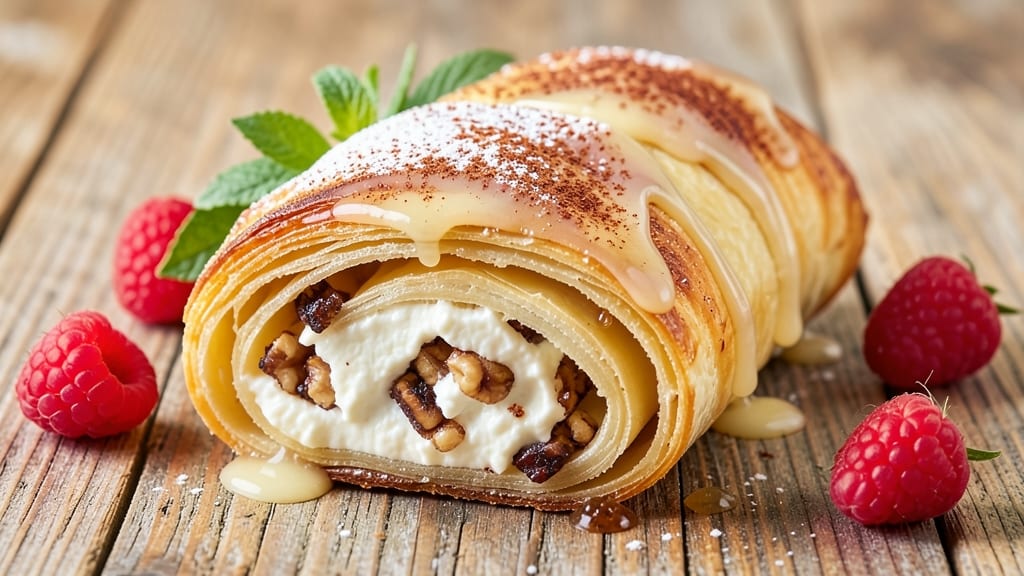
Austrian cheese strudel delivers the perfect balance of crispy, flaky layers and warm, spiced filling that tastes like home. 🌟 This classic dessert showcases thin, paper-like pastry wrapped around a rich blend of sweetened cottage cheese, raisins, and aromatic vanilla and cinnamon.
The secret lies in the dough's delicate texture—achieved through proper stretching and baking techniques—while the filling's subtle sweetness and nutty depth make every bite unforgettable.
What sets this recipe apart is its authenticity, rooted in Austrian tradition yet adaptable for home cooks. While traditional methods call for hand-stretched dough, modern shortcuts like pre-made strudel dough still deliver impressive results.
The filling's blend of cottage cheese, raisins, and warm spices creates a harmonious contrast with the crispy crust, making it a showstopper for gatherings or special occasions.
By following this method, you'll achieve a strudel with golden-brown edges and tender layers that practically melt in your mouth. The aroma of vanilla and cinnamon fills the kitchen as it bakes, creating an experience as delightful as the final product.
Whether served warm with vanilla sauce or dusted with powdered sugar, this strudel is sure to impress.
For those familiar with apple strudel, this cheese version offers a comforting alternative with a different flavor profile—rich, slightly tangy, and perfectly balanced. The recipe includes tips for achieving the ideal texture and troubleshooting common challenges, ensuring success even for first-time strudel makers.
Let's get started on creating this timeless dessert.
Ingredients for austrian cheese strudel
Sixteen ingredients crafting Austrian tradition with modern adaptability—flaky perfection awaits.
| Ingredient | Amount | Notes |
|---|---|---|
| Strudel Dough (Store-Bought or Homemade) 🍞 | 1 package | Pre-made or homemade, 14x18 inches |
| Large Eggs 🥚 | 3 whole | For egg wash, room temperature |
| Large Egg Yolks 🥚 | 2 whole | For filling enrichment |
| Large Egg Whites 🥚 | 2 whole | For filling lightness |
| Large Curd Cottage Cheese 🧀 | 2 cups | Full-fat, 4% or higher |
| Granulated Sugar 🍚 | 1 cup | Superfine preferred for dissolving |
| Ground Cinnamon 🌿 | 2 tbsp | Ceylon preferred for authentic flavor |
| Vanilla Extract 🍯 | 1 tbsp | Pure alcohol-free preferred |
| Raisins 🍇 | 1 ½ cups | Golden or dark, plumped |
| Unsalted Butter 🧈 | ¼ cup | Melted, for dough brushing |
| Powdered Sugar 🍚 | ¼ cup | For final dusting |
| Diamond Crystal Kosher Salt 🧂 | ½ tsp | For dough and filling balance |
| Toasted Slivered Almonds 🌰 | ½ cup | Optional for crunch |
| Vanilla Bean Seeds 🍯 | 1 tsp | Scraped from 1 pod |
The dough is non-negotiable for that signature paper-thin texture. Pre-made strudel dough from Kaiser's or Trader Joe's saves time while delivering authentic results—just ensure it's labeled for strudel use. For homemade, phyllo dough won't cut it; traditional strudel dough requires lard or suet for that melt-in-your-mouth quality. The cottage cheese must be full-fat—4% or higher—for proper texture; low-fat versions yield a dry filling. Raisins should be plumped in warm tea or rum extract for 15 minutes before draining—Golden raisins add subtle sweetness while dark raisins contribute depth. Toast your almonds in a dry pan until golden for optimal crunch.
No strudel dough? Homemade version requires flour, lard, and patience—start with a basic recipe and practice stretching. Substitute raisins with dried apricots or figs, chopped and plumped similarly. The vanilla extract can be swapped for vanilla bean paste (use half the amount) or even almond extract at one-third the quantity. For a nutty variation, replace almonds with walnuts or pecans. The egg yolks and whites can be separated from a single carton of large eggs—just ensure they're at room temperature for proper incorporation. If you're short on time, pre-made strudel filling mixes from specialty stores work, though they lack the homemade touch.
Store-bought dough keeps in the freezer for up to 6 months—thaw overnight in the fridge before use. The filling components can be prepped 2 days ahead and refrigerated, though the raisins should be added fresh before rolling. Once assembled, strudel keeps 3 days in an airtight container at room temperature, though it's best enjoyed within 2 days for optimal texture. For make-ahead convenience, freeze the rolled strudel (unbaked) for up to 3 months350°F oven for 5 minutes to restore crispness.
Why You'll Love This Recipe
- No-Fuss Assembly: I swear, the hardest part is cracking the eggs—everything else is just folding. That creamy cottage cheese filling goes together in 10 minutes, and the dough? You can buy it pre-made or whip it up in 20 if you’re feeling ambitious. Honestly, I’ve made this on a Friday night with a glass of wine in hand and still had time to relax.
- Creamy Crispy Magic: That contrast? Chef’s kiss. The strudel dough gets perfectly golden and shatteringly crisp at the edges while the egg-cottage cheese filling stays rich and pillowy inside. It’s like dessert and breakfast had a baby, and I’ll take it any day.
- Weeknight Dinner to Dessert: Between us, this is my lazy Sunday brunch or late-night snack go-to. Serve it warm with a drizzle of honey and a sprinkle of cinnamon for a breakfast-for-dinner vibe, or let it cool for a no-bake dessert that’ll impress without effort. (Yes, even on a Tuesday night.)
- Leftovers That Don’t Suck: Unlike most baked goods, this strudel actually improves the next day—if that’s even possible. Slice it up for quick lunches, pack it in your kid’s lunchbox (they’ll eat it, I promise), or reheat a piece for a 2-minute breakfast. And the best part? Cottage cheese is cheap, so you’re not breaking the bank for seconds.
Step-by-step instructions for Austrian cheese strudel
Master the art of rolling and baking this iconic dessert for restaurant-quality layers.
👨🍳 Step 1: Prepare the Vanilla-Spiced Filling
In a large mixing bowl, combine the 2 cups large curd cottage cheese, 1 cup granulated sugar, 2 tbsp ground cinnamon, 1 tbsp vanilla extract, and 1 tsp vanilla bean seeds. Use a hand mixer or whisk to blend until completely smooth and homogeneous. The mixture should be thick but pourable—this ensures even distribution when rolled.
Next, fold in the 1.5 cups raisins and 0.5 cup toasted slivered almonds using a rubber spatula. I like to press the raisins gently into the mixture so they don't all pool at the bottom during baking. Set the filling aside while you prepare the egg wash—it needs to sit at room temperature for optimal rolling.
🍳 Step 2: Create the Egg Wash and Brush the Dough
In a separate bowl, whisk together the 3 whole large eggs until frothy. This will be your egg wash for achieving that signature golden, flaky crust. Melt the 0.25 cup unsalted butter in a small saucepan over low heat, then let it cool slightly but remain liquid.
Lay out the 1 package strudel dough on a clean, lightly floured surface. Using a pastry brush, spread the melted butter evenly over the entire surface, leaving about a 1-inch border uncovered. This butter layer creates steam during baking, which is essential for those signature flaky layers. Brush the egg wash over the buttered dough, again leaving the edge clear for sealing.
🥘 Step 3: Roll and Fill the Strudel
Here's where the magic happens: Carefully lift one long edge of the dough and begin rolling it tightly toward you, using your hands to guide the dough into a long, narrow log shape. As you roll, spread the filling evenly along the center, keeping it about 1-2 inches from the edge. I press down gently on the filling with my fingers to create a smooth, even layer.
Continue rolling until you've used all the filling, then complete the roll by sealing the edge tightly with the egg wash. The dough should be completely wrapped around the filling with no gaps—this prevents the filling from leaking during baking. Place the completed strudel seam-side down on a parchment-lined baking sheet.
🔥 Step 4: Bake to Golden Perfection
Preheat your oven to 350°F. Bake the strudel for 45-50 minutes until the crust is deep golden brown and the filling is set. You'll know it's done when the edges pull away from the pan slightly and the internal temperature reaches 190°F at the thickest part. The strudel will continue cooking slightly as it rests, so don't overbake.
While still warm, dust the top generously with 0.25 cup powdered sugar using a fine-mesh sieve. This creates that iconic snowy finish while the strudel is still hot. Let it cool for 10 minutes before slicing—this allows the filling to set properly and makes for cleaner cuts.
⏰ Step 5: Serve Warm with Vanilla Sauce
Slice the strudel into 6 equal wedges using a sharp serrated knife. Serve warm with a dusting of additional powdered sugar and a side of warm vanilla sauce made from 2 whole egg yolks, 0.25 cup granulated sugar, and 0.5 tsp ground cinnamon, whisked together and simmered until thickened. The contrast of warm strudel with cool sauce is what makes this dessert truly special.
The key to success lies in the rolling technique—keep the dough taut as you roll, and don't rush the process. Each layer should be even to ensure consistent baking. When sliced properly, you'll see those beautiful flaky layers that make Austrian strudel legendary.
Pro Tips For Making Austrian Cheese Strudel
- Preheat Pan Properly: The strudel’s crust needs a hot start—get your oven to 375°F (190°C) and let it sit for 10 minutes before baking. I learned this the hard way when my first attempt came out pale and doughy because the oven wasn’t ready. That extra wait makes the difference between a flaky, golden strudel and one that’s still undercooked inside.
- Drain Cottage Cheese Well: Skip the soggy strudel by pressing cottage cheese in a clean kitchen towel or cheesecloth for 30 minutes before mixing. After burning three batches with a watery filling, I finally realized this step isn’t optional—it keeps the texture light and prevents a gummy mess. (Yes, even if you’re impatient like me.)
- Beat Eggs Separately: Don’t just crack eggs into the bowl—whisk yolks and whites separately before combining. The yolks add richness, while the whites create structure, and mixing them first ensures a smoother, more stable filling. I was skeptical until I tried it—now it’s non-negotiable for me.
- Use a Thin Layer of Dough: Stretch the dough as thin as possible—aim for ⅛-inch thickness—and trim excess edges before rolling. Thick spots burn while thin areas stay raw, and those edges? They just turn into crispy, useless scraps. A little patience here saves you from a lopsided, uneven bake.
Essential equipment for this recipe
Strudel Dough Tools
For authentic results, I recommend using a large rolling pin (about 12 inches long) to thin your strudel dough to paper-thin layers. A wooden rolling pin like the OXO Good Grips works best—it prevents sticking and distributes pressure evenly.
If you're making homemade dough, a well-floured surface (I use King Arthur Unbleached All-Purpose Flour) is essential for preventing tears. For pre-made dough, check the package instructions—some brands require special stretching techniques. 🌟
Filling Mixers
The cottage cheese filling needs thorough blending for a smooth texture. I use a hand mixer with a paddle attachment (like the KitchenAid KHM5221CU) for about 2-3 minutes to fully incorporate the sugar and spices.
For a more rustic approach, a wooden spoon works too, though it requires more elbow grease. A fine-mesh sieve (like the OXO Good Grips) helps sift the powdered sugar evenly over the finished strudel.
For raisin plumping, a small heatproof bowl and fine-mesh strainer are handy for draining excess liquid. 🍯
Baking Essentials
A 9x13-inch baking sheet with parchment paper is perfect for this recipe—it prevents sticking and makes cleanup effortless. I preheat my oven to 350°F using the convection setting for even baking. A digital meat thermometer (like the Thermoworks Smoke) ensures you hit the perfect 190°F internal temperature without overbaking.
For brushing the egg wash, a small pastry brush (like the Norpro 1001) gives precise control. 🔥
Serving Gear
To serve your strudel beautifully, I use a sharp serrated knife (like the Wüsthof Ikon) for clean slices. A fine-mesh powdered sugar shaker (like the Mason Jar Powdered Sugar Shaker) makes dusting effortless. For the vanilla sauce, a small saucepan and whisk are essential.
I also recommend a large serving platter (like the Le Creuset Stoneware) to showcase the strudel's golden layers. A small bowl for extra powdered sugar completes the presentation. ✨
Optional Extras
For toasting almonds, a small skillet or toaster oven works perfectly. A fine-mesh colander helps drain plumped raisins efficiently. If you're making homemade dough, a food processor (like the Cuisinart DFP-14BCY) can help mix the dough ingredients quickly.
For freezing, I use quart-sized freezer bags with ziplock seals to protect the strudel from freezer burn. 🧊
Nutrition facts
Frequently asked questions
What makes Austrian cheese strudel different from apple strudel?
Unlike apple strudel which features sweet spiced fruit filling, Austrian cheese strudel uses a rich blend of cottage cheese, raisins, and warm spices like cinnamon and vanilla. The dough is also typically rolled into a log shape rather than spread flat, creating a different texture experience. While apple strudel is often served with whipped cream, cheese strudel pairs beautifully with vanilla sauce or powdered sugar.
Can I make this strudel without pre-made dough?
Traditional Austrian strudel dough requires patience but yields the most authentic results. You'll need flour, lard (or butter), eggs, and a bit of salt. The key is stretching the dough paper-thin by hand while it's still warm. Start with a small batch to practice the technique before attempting the full recipe. Homemade dough gives that signature melt-in-your-mouth texture that pre-made versions can't always match.
How do I prevent the filling from leaking during baking?
Sealing the edges properly is crucial. Brush the dough's outer edge with egg wash before rolling, then press it firmly against the filled center. Keep the filling about 1-2 inches from the edges to prevent overflow. If you notice small gaps after rolling, use extra egg wash to seal them. Baking at the correct 350°F temperature helps the dough set properly around the filling, minimizing leakage.
What's the best way to reheat leftover strudel?
For best results, slice the strudel and reheat individual portions in a 350°F oven for 5-7 minutes until warmed through. This restores the crispy texture without making it soggy. You can also use the microwave for 15-20 seconds on medium power, but it won't recreate the bakery-fresh crunch. For serving, dust with extra powdered sugar to refresh the presentation.
Can I substitute cottage cheese in the filling?
While cottage cheese gives the authentic texture, you can substitute with ricotta cheese or a blend of cream cheese and sour cream for a smoother filling. For best results, use equal volume but reduce sugar slightly (about 1/4 cup less) since these alternatives are sweeter. The filling should remain thick but spreadable for proper rolling. Quark cheese (common in Austria) works perfectly if available.