
Soups & Stews
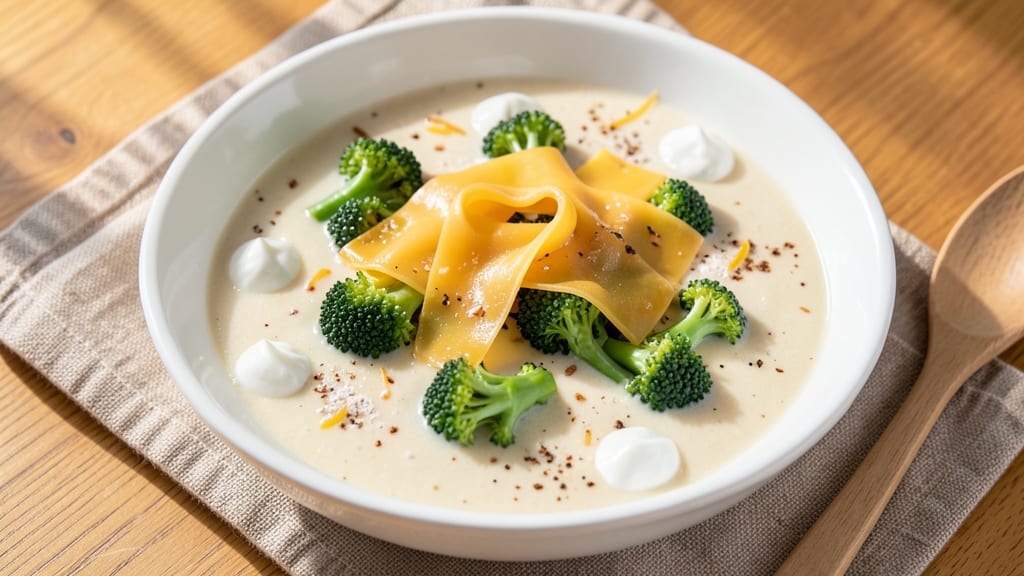
This bariatric broccoli cheese soup recipe delivers all the creamy comfort of classic cheddar soup—without the heavy calories or digestive strain. Designed for post-surgery diets, it blends pureed veggies and lean protein into a smooth, easy-to-swallow texture that still satisfies cravings.
What makes it special is the clever use of Greek yogurt and low-fat cheese to mimic richness while keeping portions controlled at just 150 calories per serving with 12 grams of protein.
The secret lies in balancing nutrition and texture: broccoli provides fiber and vitamins, while egg whites and protein powder boost satiety without overloading your system. Unlike traditional recipes, this version skips heavy cream and full-fat dairy, replacing them with lighter alternatives that still create that velvety consistency.
The soup blends to a silky smoothness—critical for bariatric patients—while maintaining enough body to feel substantial.
What you’ll end up with is a restaurant-quality soup that’s gentle on digestion but packed with flavor. Each bowl delivers high protein and low carbohydrates, making it perfect for weight management while still feeling indulgent.
The recipe includes portion control tips to prevent overeating, and optional modifications for those transitioning back to regular diets.
Whether you’re recovering from surgery or simply watching calories, this soup proves healthy eating doesn’t mean sacrificing comfort. Ready in 20 minutes with minimal prep, it’s the ideal meal for anyone needing nourishment without compromise. Let’s make it—your taste buds (and diet) will thank you.
Ingredients for bariatric broccoli cheese soup
Pantry staples meet bariatric-friendly swaps for a soup that feels indulgent yet stays light.
| Ingredient | Amount | Notes |
|---|---|---|
| Fresh Broccoli Florets 🥦 | 4 cups | Chopped into small pieces |
| Low-Fat Cheddar Cheese 🧀 | 1 cup | Shredded, low-fat variety |
| Plain Nonfat Greek Yogurt 🥛 | 1 cup | Full-fat version not recommended |
| Large Egg Whites 🥚 | 4 whole | Room temperature preferred |
| Unflavored Whey Protein Powder 💊 | ½ cup | Vanilla flavor also works |
| Low-Sodium Chicken Broth 🍲 | 2 cups | Vegetable broth substitute OK |
| Extra-Virgin Olive Oil 🫒 | 1 tbsp | For smooth texture blending |
| Fresh Garlic Cloves 🧄 | 2 cloves | Minced for flavor depth |
| Yellow Onion 🧅 | ½ whole | Diced finely for smoothness |
| Low-Fat Milk 🥛 | ½ cup | 1% or skim preferred |
| Diamond Crystal Kosher Salt 🧂 | ½ tsp | Adjust to taste carefully |
| Ground Black Pepper 🌶️ | ¼ tsp | Freshly ground preferred |
| Fresh Parsley 🌿 | ¼ cup | Chopped for garnish |
| Xanthan Gum 🧪 | ¼ tsp | For ultra-smooth texture |
The broccoli is your fiber powerhouse—fresh, bright green florets pack the most nutrients, but frozen works in a pinch (no thawing needed). For cheese, Kraft Freeze or Cabot Low-Fat melt beautifully without adding excess calories. The Greek yogurt? Fage 0% plain is my go-to—it thickens the soup perfectly while keeping it protein-rich. Egg whites are non-negotiable for that creamy texture without the fat; liquid egg whites from the carton save time. If you can't find whey protein, vanilla or unflavored plant-based protein powder works just as well.
No chicken broth? Vegetable broth plus a splash of lemon juice mimics the depth. The olive oil might seem counterintuitive, but it's what creates that velvety mouthfeel—California Olive Ranch extra-virgin is my secret. For the onion and garlic, sauté them first in a separate pan to deepen their flavor before blending. Want to boost protein further? Add 1 scoop collagen peptides (unflavored) to the blend. The xanthan gum is optional but makes the texture restaurant-quality—Bob's Red Mill sells it in the baking aisle.
Broccoli keeps for 5 days in the fridge, but chop it right before blending to preserve nutrients. The cheese and yogurt blend stays fresh for 3 days in an airtight container, but I freeze it in ice cube trays for 3 months—perfect for quick meals. Garnish with parsley right before serving (it wilts fast). For portion control, use 8-ounce measuring cups—each serving stays under 150 calories while packing 12g protein. Double the batch and freeze half for later; it reheats beautifully.
Why You'll Love This Recipe
- Zero-Fuss Prep: I swear by this soup because it’s the kind of recipe where you can chop broccoli while scrolling through your phone—no fancy techniques, just florets and a pot. The egg whites and whey blend in like magic, so you’re not stuck measuring every ingredient to a tee.
- Creamy Without Guilt: Honestly, the mix of Greek yogurt and low-fat cheese gives it that real cheesy pull, but with half the calories. That first spoonful? Rich, velvety, and somehow still light enough to eat a bowl without a side of regret.
- Meal Prep MVP: Between us, this is my go-to for lunch all week. It reheats like a dream—no splitting or soggy bits—so I make a big batch Sunday and grab a jar before work. (Yes, even on a Tuesday night.)
- Budget-Busting Comfort: Broccoli and eggs are cheap, but the flavor feels indulgent. I’ve made this for picky eaters, post-surgery friends, and my own lazy nights—everyone clears their plate. That’s the win.
Step-by-step instructions for bariatric broccoli cheese soup
Here's how to create a velvety, protein-packed soup that satisfies without overloading.
Sauté Aromatics for Flavor Foundation
Heat the 1 tablespoon extra-virgin olive oil in a medium saucepan over medium heat. Add the 0.5 whole yellow onion and 2 cloves fresh garlic cloves (minced), cooking for 3-4 minutes until the onion becomes translucent and the garlic releases its aroma. You'll know it's ready when the mixture smells intensely fragrant and the onion edges begin to soften slightly.
This step builds flavor without adding calories. Keep the heat moderate—if it starts to brown too quickly, reduce to medium-low to prevent burning. The garlic should sizzle gently, not burn, as burnt garlic adds bitterness that overpowers the delicate broccoli flavor. I like to stir occasionally to ensure even cooking of both ingredients.
Cook Broccoli Until Tender-Crisp
Add the 4 cups fresh broccoli florets to the pan and stir to combine with the aromatics. Cook for 5-6 minutes over medium heat, stirring occasionally, until the broccoli softens but still retains a slight bite. You're aiming for tender-crisp texture—when you pierce a floret with a fork, it should yield slightly but not turn mushy.
Don't overcook the broccoli here. Overcooked florets release excess water, which can dilute your final soup and make it watery. If you notice steam building up quickly, you can cover the pan with a lid for the last minute of cooking to help steam the broccoli gently. The florets should be bright green and vibrant—no dulling of color.
Create the Protein Base
In a blender, combine the 4 whole large egg whites, 0.5 cup unflavored whey protein powder, 0.5 cup low-fat milk, 0.25 tsp xanthan gum, 0.5 tsp diamond crystal kosher salt, and 0.25 tsp ground black pepper. Blend until completely smooth—this will be your protein-rich thickening agent. The mixture should look like a thick, pale yellow custard with no visible lumps.
Xanthan gum is key here for ultra-smooth texture. If you don't have it, you can substitute 0.5 tsp cornstarch, but the soup won't be as velvety. This protein blend will give your soup that satisfying creaminess without the calories of traditional cream or heavy cheese. Keep the blender speed moderate to prevent incorporating air bubbles that could make the soup frothy.
Build the Soup Base
Pour the 2 cups low-sodium chicken broth into the saucepan with the broccoli and aromatics. Bring to a gentle simmer over medium heat, then reduce heat to low. Stir in the blended protein mixture while whisking constantly to prevent lumps from forming. The soup should begin to thicken immediately as the egg whites and protein powder cook.
Simmer for 3-4 minutes, stirring frequently, until the mixture reaches a smooth, creamy consistency. You're looking for a soup that coats the back of a spoon but still flows easily. If it thickens too quickly, you can add 1-2 tablespoons of hot broth to adjust the texture. The color should be a pale green with no visible flecks of protein powder.
Finish with Cheese and Garnish
Remove the soup from heat and stir in the 1 cup shredded low-fat cheddar cheese and 1 cup plain nonfat Greek yogurt. The cheese should melt completely, creating a rich, tangy flavor without making the soup heavy. If you notice any unmelted cheese, stir over low heat for an additional 1-2 minutes until fully incorporated.
Taste and adjust seasoning if needed—you might want to add a pinch more salt or pepper. Ladle the soup into bowls and garnish with 0.25 cup chopped fresh parsley. The parsley adds freshness and visual appeal without significant calories. Serve immediately while hot, as the texture will thicken slightly as it cools. Each spoonful delivers protein, fiber, and flavor without the guilt.
Pro Tips For Making Bariatric Broccoli Cheese Soup
- BLEND IN STAGES: Don’t dump everything into the blender at once—especially not the egg whites. Start with the broccoli, yogurt, and protein powder until smooth, then add the cheese and egg whites last. I learned this the hard way when I ended up with a lumpy, curdled mess because the egg whites broke too early.
- SALT THE CHEESE FIRST: Sprinkle the low-fat cheddar with a pinch of salt before blending—it dissolves better and saves you from adding extra later. The fat in cheese is already reduced, so you need that flavor boost, and this trick guarantees it doesn’t taste bland.
- STEAM BROCCOLI UNTIL TENDER: Overcooked broccoli turns to mush, but undercooked florets make the soup taste raw. Steam them until they’re bright green but fork-tender (about 5 minutes), then shock in ice water to stop cooking. This keeps the texture perfect and prevents a watery soup.
- WHISK EGG WHITES FIRST: Whisk the egg whites until frothy before adding them to the hot soup—this prevents them from scrambling. Pour the soup into a bowl, then slowly stir in the egg whites while keeping the pot on low heat. I was skeptical until I tried it, and now it’s non-negotiable for creaminess.
Storing and reheating this recipe
Refrigerator Storage
Store your bariatric broccoli cheese soup in an airtight glass container (I recommend Pyrex) for up to 3 days at 40°F or below.
The protein-rich blend and xanthan gum help maintain its velvety texture, but I always let it cool completely before refrigerating to prevent condensation that can dilute flavors.
For portion control, divide into 8-ounce servings—this keeps each bowl under 150 calories while maximizing protein at 12 grams per serving. 🥣
Freezer Storage
Freeze your soup in 1-cup portions using silicone ice cube trays for easy single-serving meals. Once frozen, transfer cubes to a ziplock freezer bag, removing all air to prevent freezer burn. This method preserves texture for up to 3 months.
When reheating, thaw overnight in the fridge or use the microwave defrost setting for 1-2 minutes before warming. The xanthan gum holds up beautifully in freezing, so you won’t lose that creamy consistency. ❄️
Reheating Methods
For best results, reheat on the stovetop over low-medium heat—this prevents scorching while gently restoring the soup’s velvety texture. Add 1-2 tablespoons of water or broth if the soup thickens too much during reheating.
If using the microwave, heat in 30-second intervals, stirring between each, until reaching 165°F internally. Never reheat beyond 165°F to preserve food safety and texture. The parsley garnish should always be added fresh after reheating to maintain its vibrant color. 🔥
Texture Preservation
The secret to maintaining that restaurant-quality smoothness after reheating lies in the xanthan gum and protein blend. If your reheated soup seems slightly grainy, stir in ½ teaspoon of cold water to help re-emulsify the mixture.
For extra creaminess, blend again briefly with an immersion blender—this works wonders without requiring a full blender. The egg whites and whey protein are particularly sensitive to overheating, so always reheat gently. 💫
Portion Control Tips
Use 8-ounce measuring cups for precise portions—this ensures each serving stays under 150 calories while delivering 12 grams of protein. For bariatric patients, I recommend serving with a small side salad (2 cups mixed greens with 1 tablespoon balsamic) to add volume without calories.
The soup’s smooth texture makes it easy to swallow, but the salad provides necessary fiber. Label your freezer portions clearly with dates to track freshness. 📅
Garnish Freshness
Always add fresh parsley and a dash of black pepper right before serving—these elements brighten the soup’s flavor after reheating. For extra protein, top with 1 teaspoon of nutritional yeast (about 2 grams of protein per teaspoon).
Avoid heavy garnishes like croutons or sour cream, which can disrupt the bariatric-friendly balance. The parsley also adds visual appeal, making the soup feel more restaurant-worthy. ✨
Nutrition facts
Frequently asked questions
Can I use this soup recipe for other weight-loss diets?
While designed for bariatric diets, the principles work for other low-calorie plans too. The key is the protein-to-fiber ratio—just swap ingredients as needed. For example, replace whey protein with regular Greek yogurt for non-bariatric versions, or use full-fat cheese if you're not tracking macros. The portion control tips still apply for any calorie-conscious diet.
Why does the recipe call for egg whites instead of whole eggs?
The egg whites provide pure protein without the fat or cholesterol from yolks—critical for bariatric diets. They also create that creamy texture when blended with protein powder. For a non-bariatric version, you could use whole eggs, but you'd need to adjust the cheese and broth amounts to maintain balance. The recipe keeps it simple and safe for post-surgery digestion.
What if I can't find xanthan gum?
No problem! Use ½ teaspoon cornstarch as a substitute—it'll still thicken the soup, though the texture might be slightly less velvety. For best results, whisk the cornstarch with a little cold water first to create a slurry before adding it to the hot soup. The protein powder and egg whites will still do most of the thickening work.
How can I make this soup thicker or thinner?
For a thicker consistency, simmer uncovered for 2-3 extra minutes or add ½ teaspoon more xanthan gum. If it's too thick, stir in 1-2 tablespoons of hot broth or water while whisking constantly. Remember, bariatric diets often prefer smoother textures—adjust gradually to avoid lumps that could be difficult to swallow.
Is this soup safe for immediate post-surgery (phase 1) diets?
This recipe is designed for phase 2+ bariatric diets (typically 2-4 weeks post-surgery). For phase 1 (clear liquids), you'd need to omit all solids and use only broth-based versions. Always consult your surgeon or dietitian before introducing new foods—this soup provides protein and fiber, which are important but may be too substantial immediately after surgery.