
Appetizers
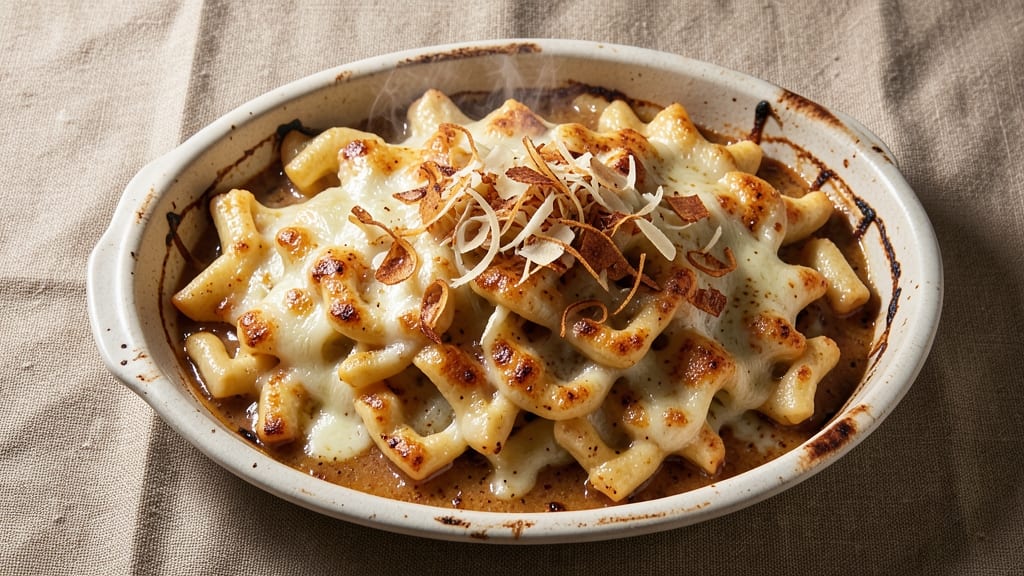
This baked cheese spaetzle recipe delivers the perfect marriage of crispy edges and silky cheese pulls that make every bite irresistible.
The traditional German technique starts with a simple egg-based dough that transforms into delicate ribbons when boiled, then pan-fried to golden perfection before baking with melted cheese until bubbly and golden.
What sets this dish apart is the balance of textures—crispy on the outside, creamy and cheesy inside, with just the right amount of pull that makes it impossible to resist.
The foundation of great spaetzle lies in the dough, where flour, eggs, and water create a smooth batter that can be pressed through a spaetzle maker or even a colander with holes.
Once boiled and fried, the spaetzle develops that signature crispiness, while the cheese—typically a blend of Gruyère, Emmental, and Parmesan—melts into a luxurious sauce during baking. This method ensures every forkful delivers that satisfying contrast of textures and flavors.
What you’ll end up with is a dish that’s hearty enough to serve as a main course but light enough to enjoy as an appetizer. The crispy edges add a satisfying crunch, while the melted cheese creates long, gooey strands that pull perfectly.
This recipe is designed to impress with its restaurant-quality results, yet it’s simple enough to prepare at home with just a few key techniques.
Pair this baked cheese spaetzle with roasted vegetables or a fresh salad for a complete meal that’s both comforting and elegant. The beauty of this dish lies in its versatility—it’s perfect for weeknight dinners or special occasions, and the leftovers reheat beautifully.
Here’s how to achieve that perfect balance of crispy and cheesy every time.
Ingredients for baked cheese spaetzle
Crispy spaetzle magic starts with these 12 simple ingredients—flour, eggs, and cheese do the heavy lifting.
| Ingredient | Amount | Notes |
|---|---|---|
| All-Purpose Flour 🌾 | 2 cups | Sifted for smooth batter |
| Large Eggs 🥚 | 4 whole | Room temperature for even mixing |
| Water 💧 | 1 cup | Lukewarm for better incorporation |
| Salt 🧂 | 1 tsp | Diamond Crystal preferred |
| Gruyère Cheese 🧀 | 1 cup | Freshly grated for best melt |
| Emmental Cheese 🧀 | 1 cup | Shredded, not pre-shredded |
| Parmesan Cheese 🧀 | ½ cup | Freshly grated from block |
| Unsalted Butter 🧈 | 4 tbsp | Melted for cheese sauce |
| Heavy Cream 🥛 | ½ cup | For extra creaminess |
| Garlic Cloves 🧄 | 2 cloves | Minced for flavor depth |
| Fresh Nutmeg 🌿 | ¼ tsp | Freshly grated for warmth |
| Vegetable Oil 🫒 | 1 cup | For pan-frying spaetzle |
The cheese trio—Gruyère, Emmental, and Parmesan—is non-negotiable for that signature pull. Whole Foods or specialty cheese shops carry the best blocks, but any grocery store with a deli counter will have pre-shredded options (though freshly grated is worth the extra minute). Look for Gruyère with good marbling—it melts like a dream. The flour should be all-purpose, but if you've got bread flour, use it for a slightly chewier texture. Eggs? Room temperature makes all the difference in the batter's smoothness—just take them out 20 minutes before mixing. For the nutmeg, Penzeys has the best pre-ground, but a microplane works too if you've got whole nutmeg.
No Gruyère? Swiss cheese works in a pinch, but you'll lose some of that luxurious melt. Pre-shredded cheese? Toss it with cornstarch to prevent clumping. Out of heavy cream? Half-and-half plus a splash of milk gets you close. The vegetable oil can be swapped for butter (melted), but it'll add richness. For the garlic, fresh is best, but if you're in a bind, one teaspoon of garlic powder works. And if you don't have a spaetzle maker? A colander with big holes or even a potato ricer works—just press the batter through firmly. The key is getting those long, thin ribbons for maximum crispiness.
Freshly made spaetzle reheats beautifully—just pop it in the oven at 350°F for 10-15 minutes until bubbly again. Store leftovers in an airtight container for up to 3 days in the fridge, or freeze for 2 months (layer with parchment paper to prevent sticking). Pro tip: Make a double batch—the second day is always better as the flavors meld. And if you're prepping ahead, pan-fry the spaetzle first, then freeze before baking with cheese. Just add 5 extra minutes to the baking time when reheating.
Why You'll Love This Recipe
- No Fuss, No Stress: I swear, this recipe is the spaetzle equivalent of "set it and forget it." Just toss flour, eggs, water, and salt into a blender, let it rest, then pour onto a sheet pan—no ripping, no fussing. The Gruyère melts into golden pockets while you’re still chopping veggies for dinner.
- Melty Magic: That first bite of crispy edges giving way to gooey Gruyère? It’s like someone took all the best parts of mac and cheese and made them better. The eggy richness balances the sharpness of the Gruyère, and honestly? It’s the kind of dish that makes you pause mid-bite just to savor it.
- Leftover Hero: Between us, this is my go-to for lazy Sundays or when I’ve got a house full of people. Bake a big tray, reheat slices in the oven, and suddenly you’ve got a meal that feels fancy but costs next to nothing. My kids even fight over the leftovers—(yes, even on a Tuesday night).
- Budget-Friendly Luxury: Gruyère might sound fancy, but a block goes a long way when you’re baking it in. Flour, eggs, and water? Pantry staples. This is the kind of comfort food that makes you feel like you’re eating at a Swiss chalet without the price tag. Plus, it’s the only spaetzle recipe where you won’t feel guilty about doubling the batch.
Step-by-step instructions for baked cheese spaetzle
Let's make spaetzle with irresistible crispy edges and that perfect pull of melted cheese.
Make the Spaetzle Batter
In a large bowl, whisk together the 2 cups all-purpose flour, 1 tsp salt, and 0.25 tsp freshly grated nutmeg until combined. Add the 4 whole large eggs and mix until smooth. Slowly pour in the 1 cup lukewarm water while whisking continuously to prevent lumps. The batter should be thick but pourable—like heavy pancake batter.
This is where the magic starts. The nutmeg adds warmth, and the lukewarm water ensures the eggs blend perfectly without scrambling. If the batter seems too thick, add 1 tablespoon water at a time until it reaches the right consistency. Let the batter rest for 5 minutes while you prepare the next steps—this helps the gluten relax for smoother spaetzle.
Cook the Spaetzle in Oil
Heat the 1 cup vegetable oil in a large skillet over medium-high heat until it shimmers but doesn't smoke. Using a spaetzle maker or a colander with large holes, press the batter through into the hot oil, working in small batches. The spaetzle will immediately begin to puff and turn golden.
Cook for 1-2 minutes per batch until the edges are crispy and the centers are just set. You'll know it's ready when the spaetzle float to the surface and develop a golden-brown crust. Use a slotted spoon to transfer them to a paper towel-lined plate to drain excess oil. Don't overcrowd the pan—this keeps the oil hot enough for proper browning.
Prepare the Cheese Sauce
In a separate skillet, melt the 4 tbsp unsalted butter over medium heat. Add the 2 minced garlic cloves and sauté for 30 seconds until fragrant. Sprinkle in the 1 cup shredded emmental cheese and 1 cup freshly grated gruyère cheese, stirring constantly until fully melted and smooth. Remove from heat and stir in the 0.5 cup heavy cream and 0.5 cup freshly grated parmesan cheese until creamy.
Here's where the flavors come together. The nutmeg in the spaetzle batter pairs perfectly with the sharpness of the parmesan and the creamy emmental. If the sauce thickens too much, whisk in 1-2 tablespoons hot water to loosen it. Keep the sauce warm while you assemble the dish.
Assemble and Bake for Crispy Edges
Preheat your oven to 375°F. Transfer half of the cooked spaetzle to a greased 9x13-inch baking dish, spreading them in an even layer. Pour half of the cheese sauce over the spaetzle, gently tossing to coat. Repeat with the remaining spaetzle and sauce. The dish should look like a cheesy spaetzle mountain.
Bake for 15-20 minutes until the top is golden brown and bubbly. Watch closely in the last few minutes—you want that perfect crispy crust. If it browns too quickly, tent with foil. The cheese should be fully melted with a slight pull when you lift a piece.
Rest and Serve
Remove from the oven and let the spaetzle rest for 5 minutes before serving. This resting time allows the cheese to set slightly, making it easier to slice and serve. The edges should be crispy enough to hold their shape, while the interior remains tender and cheesy.
Serve immediately with extra cheese sauce on the side if desired. Each bite should deliver that perfect combination of crispy edges, silky cheese pulls, and nutmeg warmth. For extra crunch, sprinkle with additional parmesan before serving—trust me, it makes all the difference!
Pro Tips For Making Baked Cheese Spaetzle
- STIR THE DOUGH LIKE CRAZY: I learned this the hard way—skipping the vigorous stirring after mixing flour, eggs, and water leaves you with dense, rubbery spaetzle. Use a wooden spoon or spatula and go for at least 30 seconds of aggressive mixing until the dough pulls away from the sides. The gluten develops faster this way, and your spaetzle will hold its shape when baked.
- GRATE THE GRUYÈRE FINE: That chunky cheese you’re tempted to toss in? It’ll melt into sad, greasy pools. Use a box grater or food processor to get the Gruyère as fine as table salt—this ensures even distribution and a creamy, melt-in-your-mouth texture. (Yes, even if it takes 10 minutes. Your future self will thank you.)
- DON’T OVERMIX THE BATTER: Once you add the grated cheese to the dough, mix just until combined—about 10 strokes max. Overworking it turns the spaetzle into a gluey mess that won’t crisp up in the oven. Think "marble swirls," not a uniform paste.
- BAKE AT 375°F, NOT HOTTER: Cranking the oven to 400°F or higher will brown the top too fast before the center cooks through. Stick with 375°F and bake for 20–25 minutes—this gives the Gruyère time to melt smoothly without burning the edges. (I know, I know, you want it golden now, but trust the process.)
Pro cooking tips for great baked cheese spaetzle
Perfect Spaetzle Texture
For that signature crispy edge and silky interior, cook the spaetzle in small batches over medium-high heat—never overcrowd the pan. The oil should be hot but not smoking (around 350°F).
I press the batter through a spaetzle maker for even ribbons, but a colander with large holes works too. Let them cook until they float to the surface and turn golden—this ensures the crispy texture we all love. 🔥
Cheese Sauce Secrets
Use freshly grated cheese (never pre-shredded) for the best melt and texture. The Gruyère and Emmental blend creates that luxurious pull, while Parmesan adds sharpness. Melt the cheese low and slow over medium heat—rushing it causes clumping.
For extra creaminess, whisk in heavy cream at the end, but keep it warm until assembly to prevent thickening. 🧀
Baking for Crispy Edges
Spread the spaetzle in a single even layer in your baking dish—this ensures even browning. Bake at 375°F until the top is golden brown and bubbly (about 15-20 minutes). Watch closely in the last 5 minutes—if it browns too fast, tent with foil.
The cheese should be fully melted with a slight pull when you lift a piece. A light sprinkle of Parmesan before baking adds extra crunch. ✨
Resting for Best Results
Let the spaetzle rest for 5 minutes after baking—this lets the cheese set slightly, making it easier to slice and serve. The edges will stay crispy, while the interior remains creamy and cheesy.
Serve immediately with extra cheese sauce on the side for dipping. Trust me, this step makes all the difference in texture and presentation. 💫
Equipment Upgrades
Invest in a spaetzle maker (like the Oster Copi King) for perfect ribbons every time, but a colander with large holes works in a pinch. A 9x13-inch baking dish is ideal for even browning, and a slotted spoon helps drain excess oil.
For crispier edges, try baking on the middle rack—this ensures the top gets hot enough for that perfect golden crust. 💡
Troubleshooting Tips
If your spaetzle turns out too soft, cook them longer in the oil or bake at a slightly higher temperature (390°F). For too chewy spaetzle, reduce the oil slightly and cook at a lower heat (medium).
If the cheese sauce seizes up, whisk in 1-2 tablespoons hot water to loosen it. And if the edges aren’t crispy enough? Broil for 1-2 minutes at the end for extra crunch. 🔥
Nutrition facts
Frequently asked questions
Can I make spaetzle without a spaetzle maker?
A colander with large holes or even a potato ricer works perfectly. Press the batter through firmly to create those signature ribbons. For extra crispiness, use a slotted spoon to transfer them to paper towels after cooking in oil. The key is getting thin, even strands for maximum surface area to crisp up.
Why did my cheese sauce get grainy?
Pre-shredded cheese contains anti-caking agents that cause clumping when melted. Always use freshly grated cheese (Gruyère, Emmental, Parmesan) and melt it low and slow over medium heat. If it starts to seize, whisk in 1-2 tablespoons hot water to smooth it out. Keep the sauce warm until assembly to prevent thickening.
How do I store leftovers?
Store baked cheese spaetzle in an airtight container in the fridge for up to 3 days. For longer storage, freeze for 2 months by layering with parchment paper. Reheat in the oven at 350°F for 10-15 minutes until bubbly. Pro tip: Make a double batch—the second day is even better as flavors meld!
Can I substitute the cheese blend?
While the traditional trio (Gruyère, Emmental, Parmesan) gives the best melt and pull, you can swap in Swiss cheese for Gruyère or fontina for Emmental. For a sharper flavor, add Pepper Jack or Asiago. Avoid pre-shredded cheese—it contains additives that prevent proper melting. If you're dairy-free, try nutritional yeast or vegan cheese alternatives (though texture may vary).
Why did my spaetzle turn out too soft?
Overcrowding the pan or using oil that's not hot enough (350°F) prevents proper browning. Cook in small batches over medium-high heat until golden and floating. For extra crispiness, bake at 390°F instead of 375°F or broil for 1-2 minutes at the end. The edges should hold their shape when lifted.