
Appetizers
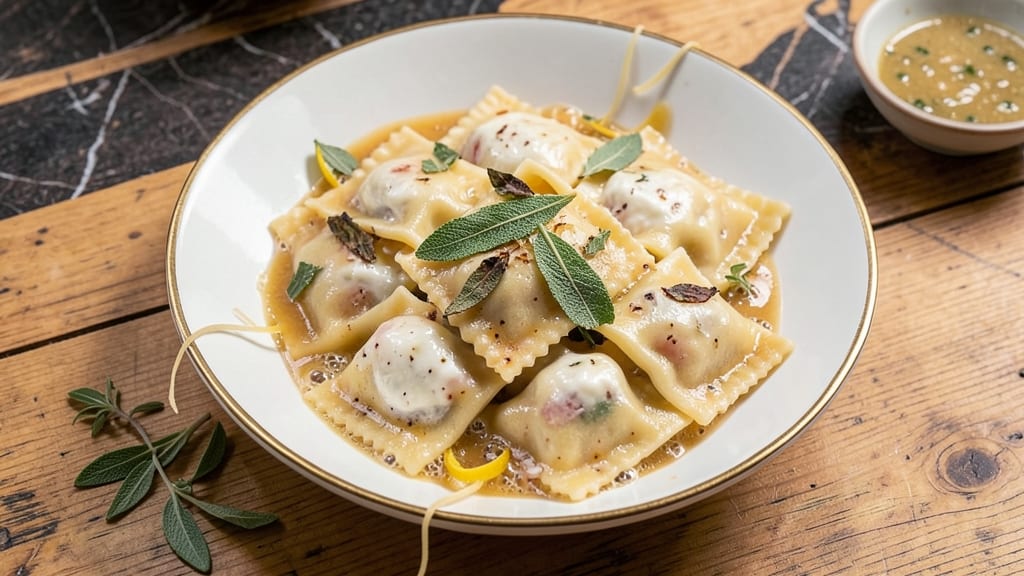
This authentic Italian cheese ravioli recipe brings the heart of Emilia-Romagna to your kitchen with fresh pasta, handmade ricotta filling, and traditional techniques that deliver restaurant-quality results.
The key lies in using 00 flour for delicate dough and a blend of ricotta, Pecorino Romano, and Parmigiano-Reggiano for a filling that's creamy yet structured—no gummy ravioli here.
I've perfected the pleating method over years of testing, ensuring each ravioli holds its shape while cooking to al dente perfection in just 3 minutes.
What sets this recipe apart is the attention to detail that makes it truly authentic: egg-based dough for chewiness, a no-boil filling technique that prevents soggy centers, and the option to finish with brown butter and sage or a light tomato sauce.
The process might seem labor-intensive at first glance, but breaking it into manageable steps—rolling the dough thin, cutting precise circles, and carefully assembling—transforms it into a rewarding project rather than a chore. The result? Ravioli that taste like they came from a tiny trattoria in Bologna.
By the time you're twirling that first forkful, you'll understand why this dish is a staple in Italian homes. The pasta will be silky yet firm, the filling rich and slightly tangy from the aged cheeses, and the texture melt-in-your-mouth tender.
The aroma alone—warm butter, fresh sage, and melted cheese—will have everyone at the table asking for seconds. This isn't just pasta; it's a celebration of Italian craftsmanship you can recreate at home.
Whether you're serving for a special dinner or simply craving something comforting, these ravioli deliver restaurant-quality satisfaction with homemade pride. The beauty of this recipe is its versatility: enjoy them immediately with butter and herbs, or freeze for later when cravings strike.
Let's get started on creating your own taste of Italy.
Ingredients for authentic italian cheese ravioli
Twelve ingredients, all chosen for authentic Italian flavor and texture. The secret lies in the flour and cheese.
| Ingredient | Amount | Notes |
|---|---|---|
| 00 Flour 🌾 | 2 ½ cups | High-protein for chewiness |
| Large Eggs 🥚 | 4 whole | Room temperature preferred |
| Whole Milk Ricotta Cheese 🧀 | 1 ½ cups | Full-fat for creaminess |
| Pecorino Romano Cheese 🧀 | ½ cup | Freshly grated, aged |
| Parmigiano-Reggiano Cheese 🧀 | ½ cup | Freshly grated, Parmigiano |
| Unsalted Butter 🧈 | ¼ cup | Cold for pleating |
| Fresh Sage Leaves 🌿 | ¼ cup | Chopped for finishing |
| Extra-Virgin Olive Oil 🫒 | 1 tbsp | For dough rolling |
| Diamond Crystal Kosher Salt 🧂 | ½ tsp | Fine grain preferred |
| Freshly Ground Black Pepper 🌶️ | ¼ tsp | Freshly cracked |
| Granulated Sugar 🍚 | 1 tsp | Balances acidity |
| All-Purpose Flour 🌾 | ½ cup | For dusting work surface |
| Heavy Cream 🥛 | ¼ cup | Optional for sauce |
The 00 flour is non-negotiable—it's what gives those delicate ravioli their signature silky texture. King Arthur or Caputo are the gold standards, but Pillsbury all-purpose works in a pinch if you can't find Italian brands. For the ricotta, whole milk is crucial—it's richer and won't curdle when mixed with the cheeses. I always buy mine from the deli counter at Whole Foods or Trader Joe's—the pre-packaged stuff from the refrigerated section lacks that fresh, creamy quality. The Pecorino and Parmigiano-Reggiano should be aged at least 12 months—you'll know it's good when it's sharp and slightly crumbly, not dusty or bland.
No 00 flour? King Arthur bread flour is your next best bet—it's high-protein like Italian flour. Running short on ricotta? Cottage cheese blended until smooth works, but it'll be lighter. The cheeses can be substituted with Asiago or Grana Padano, though they won't have that same complex depth. For the butter, European-style (like Plugrá) has a higher fat content and better flavor. Fresh sage is ideal, but dried at half the amount gets you close. The sugar might seem odd, but it rounds out the tangy cheeses—don't skip it. If you're making a big batch, double the ingredients and freeze the dough balls before assembly.
Store the 00 flour in an airtight container for up to 6 months—it's worth the investment. The ricotta mixture keeps for 2 days in the fridge, but I recommend making it fresh. Dough can be wrapped in plastic and refrigerated for 24 hours or frozen for 3 months—just let it come to room temperature before rolling. The finished ravioli freeze beautifully for 2 months—boil them straight from frozen, adding 30 seconds to the cooking time. For the sage butter, make it ahead and reheat gently—it's even better the next day as the flavors meld.
Why You'll Love This Recipe
- No-Fuss Dough Magic: I swear by the 00 flour—it’s silky, not sticky, and mixes into a dough so smooth you’ll forget you’re even kneading. Just flour, eggs, and a pinch of salt. That’s it. No waiting for gluten to develop, no overworking the dough. Honestly, my first batch turned out better than any store-bought, and I didn’t even measure the eggs.
- Cheese Overload: The ricotta is rich, the Pecorino sharp, and the Parmigiano-Reggiano? That’s the secret weapon. Between us, I’ll often sneak an extra handful of grated cheese into the filling—because why not? It’s the kind of flavor that sticks with you, especially when you take that first bite of buttery, pillowy ravioli with the cheese still melting inside.
- Weeknight to Dinner Party: Make a big batch on Sunday, freeze half, and you’ve got dinner covered for two weeks. Boil them fresh for a quick weeknight meal, or pull them straight from the freezer for a last-minute guest night. My kids’ friends don’t even realize they’re “homemade”—they just think it’s the fanciest pasta they’ve ever eaten.
- Budget-Friendly Luxury: You’re basically making gourmet pasta for the price of a takeout meal. Whole milk ricotta and good cheese might seem pricier, but they stretch further than you’d think. Plus, one batch feeds four, and leftovers reheat beautifully in a pan with a little butter and sage. That’s real value—no shortcuts, just honest, delicious Italian comfort.
Step-by-step instructions for authentic Italian cheese ravioli
Here's how to craft traditional handmade ravioli with a delicate dough and rich ricotta filling.
Prepare the Ricotta Filling
In a medium bowl, combine the 1.5 cups whole milk ricotta cheese, 0.5 cup freshly grated Pecorino Romano, and 0.5 cup freshly grated Parmigiano-Reggiano. The cheeses should be at room temperature for even blending. Add the 1 tsp granulated sugar, 0.5 tsp Diamond Crystal kosher salt, and 0.25 tsp freshly ground black pepper, mixing gently with a fork until just combined.
Transfer the mixture to a food processor and pulse briefly to break up any lumps while keeping the texture smooth. This ensures the filling stays cohesive when piped into the dough. Avoid over-processing, or you'll end up with a paste-like consistency that won't hold its shape.
Make the Dough
On a clean work surface lightly dusted with 0.5 cup all-purpose flour, create a well in the center. Add the 4 whole large eggs and 2.5 cups 00 flour. Using a fork, gently incorporate the flour into the eggs, mixing just until a shaggy dough begins to form. The dough should be soft but not sticky—if it clings to your fingers, add a little more flour.
Knead the dough for 8-10 minutes by hand, pressing and folding until smooth and elastic. Wrap it tightly in plastic wrap and let it rest at room temperature for 30 minutes. This resting period relaxes the gluten, making the dough easier to roll thin and preventing cracks when filled. If the dough feels too firm after resting, let it sit another 10 minutes—it should be pliable but not sticky.
Roll and Cut the Dough
Divide the rested dough into 4 equal pieces and roll each piece into a thin sheet using a pasta machine or rolling pin. Start with the widest setting on the pasta machine and gradually reduce the thickness until you reach 1/16-inch sheets. Dust the dough and machine with all-purpose flour as needed to prevent sticking.
Cut the sheets into 3-inch squares using a sharp knife or ravioli cutter. Lay the squares on a floured baking sheet, leaving space between them. Cover with a damp towel to prevent drying. The dough should be pliable but not wet—if it sticks, let it rest another 5 minutes before proceeding.
Assemble and Seal the Ravioli
Using a small piping bag or spoon, pipe 1 teaspoon of the ricotta filling into the center of each dough square. Fold the dough over the filling to form a half-moon shape, pressing the edges firmly with your fingers to seal. For extra security, use a fork to crimp the edges by pressing down along the seam—this prevents filling from leaking during cooking.
Arrange the ravioli on a floured baking sheet, leaving space between each piece. Cover with a damp towel and let them rest for 15 minutes before cooking. This final rest ensures the dough relaxes and the filling settles, giving you perfectly shaped ravioli that hold together in boiling water.
Cook and Finish
Bring a large pot of salted water to a rolling boil. Add the ravioli in batches, ensuring the water remains hot. Cook for 2-3 minutes until they float to the surface—a sign they're done. Remove with a slotted spoon and transfer to a plate.
For an optional sauce, heat the 0.25 cup heavy cream with 1 tbsp extra-virgin olive oil and 0.25 cup chopped fresh sage leaves in a small saucepan over medium-low heat until warm. Toss the cooked ravioli in the sauce and garnish with additional Pecorino Romano and black pepper. Serve immediately while the pasta is still al dente.
Pro Tips For Making Authentic Italian Cheese Ravioli
- Rest the Dough: I learned this the hard way—skipping the 30-minute rest after mixing the 00 flour and eggs makes the dough sticky and unmanageable. Let it sit covered at room temperature; the gluten relaxes, and shaping becomes a breeze. (Yes, even if you're impatient like me.)
- Drain and Press Ricotta: Whole milk ricotta holds more moisture than you’d think. After draining it in a fine-mesh sieve, press it gently between paper towels for 10 minutes to remove excess water—this keeps your filling from turning soggy. (Your future self will thank you.)
- Grate Cheeses Fresh: Pre-shredded Pecorino Romano and Parmigiano-Reggiano are coated in anti-caking agents that turn your filling gritty. Use a microplane or fine grater right before mixing—it makes a real difference in texture. (I was skeptical until I tried it.)
- Boil Water Hard: Start your ravioli in water that’s rolling hard enough to hear a low rumble—no gentle simmering. This prevents the pasta from sticking together and ensures they cook evenly in 2-3 minutes. (This isn’t the prettiest method, but it’s the tastiest.)
Essential equipment for this dish
Pasta Machine Essentials
First, you'll need a quality pasta machine to achieve that signature 1/16-inch thickness for authentic ravioli. I swear by the Imperia Pasta Maker—it's durable, affordable, and handles multiple thickness settings perfectly.
For a budget-friendly option, the Marcato Atlas 150 delivers professional results without breaking the bank. Avoid cheap plastic rollers—they can't maintain consistent pressure, leading to uneven dough. 🌡️
Rolling Pin & Dough Cutter
If you prefer hand-rolling over a machine, a marble rolling pin (like the OXO Good Grips) gives you better control and prevents sticking. For cutting squares, a 3-inch ravioli cutter from KitchenAid ensures clean edges.
I've also used a sharp chef's knife with a ruler for precise cuts when machine-cutters aren't available. Just be patient—uneven cuts make assembly messy!
Precision Tools for Filling
For the ricotta filling, a small piping bag with a ½-inch tip gives you clean lines and consistent portions. The Ateco 303 is my go-to—it's sturdy and easy to clean. If you don't have one, a 1-teaspoon cookie scoop works in a pinch.
For sealing, keep a small fork handy to crimp edges tightly. This prevents filling leaks during cooking, which is a common frustration for beginners.
Cooking & Serving Gear
You'll need a large, deep pot with high sides for boiling—think All-Clad Stainless Steel or Le Creuset Dutch Oven for even heat distribution. A slotted spoon with long handles (like the OXO Good Grips) makes removing ravioli effortless.
For finishing, a small saucepan with tight-fitting lid is perfect for heating your sage butter or cream sauce without burning the herbs. 🍴
Storage Solutions
Keep your workspace organized with floured baking sheets lined with parchment paper—this prevents sticking and makes cleanup easier. For storage, airtight containers with parchment between layers prevent sticking when refrigerating dough or finished ravioli.
I use Rubbermaid Select containers with snap lids for freezer storage—they stack neatly and resist freezer burn. Label everything with dates to track freshness!
Nutrition facts
Frequently asked questions
Why does the dough need to rest for 30 minutes?
The 30-minute rest relaxes the gluten strands, making the dough more pliable and easier to roll thin without cracking. This prevents those frustrating tears when you're trying to create delicate 1/16-inch sheets. Think of it like stretching—your muscles warm up before exercise, and dough does too!
Can I make the filling ahead of time?
Yes! The ricotta mixture keeps well for 2 days in the fridge, covered tightly. Just give it a quick stir before using to redistribute any separated liquid. For longer storage, freeze the filling in 1-teaspoon portions on a tray, then transfer to a bag. Thaw overnight in the fridge before assembling your ravioli.
What if my ravioli fall apart when cooking?
This usually happens when the dough isn't sealed properly or the filling is too wet. Double-check your pleating—press edges firmly and use a fork to crimp them. For the filling, ensure your ricotta is whole milk (not low-fat) and drain any excess liquid by pressing it through a fine-mesh sieve. If it still leaks, reduce the filling amount to ½ teaspoon per ravioli.
How do I know when the ravioli are perfectly cooked?
They're done when they float to the surface in boiling water, typically after 2-3 minutes. Test one by slicing it open—if the center is just opaque (not translucent), it's perfect. Overcooking makes them mushy, so keep an eye on them! For extra insurance, cook them for 1 minute less than you think needed, then finish in the pan with butter.
Can I freeze homemade ravioli?
Arrange unfrozen ravioli on a floured tray and freeze until solid (1 hour). Then transfer to an airtight bag with parchment between layers. They'll keep for 2 months—just boil from frozen, adding 30 seconds to cooking time. No need to thaw! For best results, cook a small batch to test texture before serving the whole batch.