
Appetizers
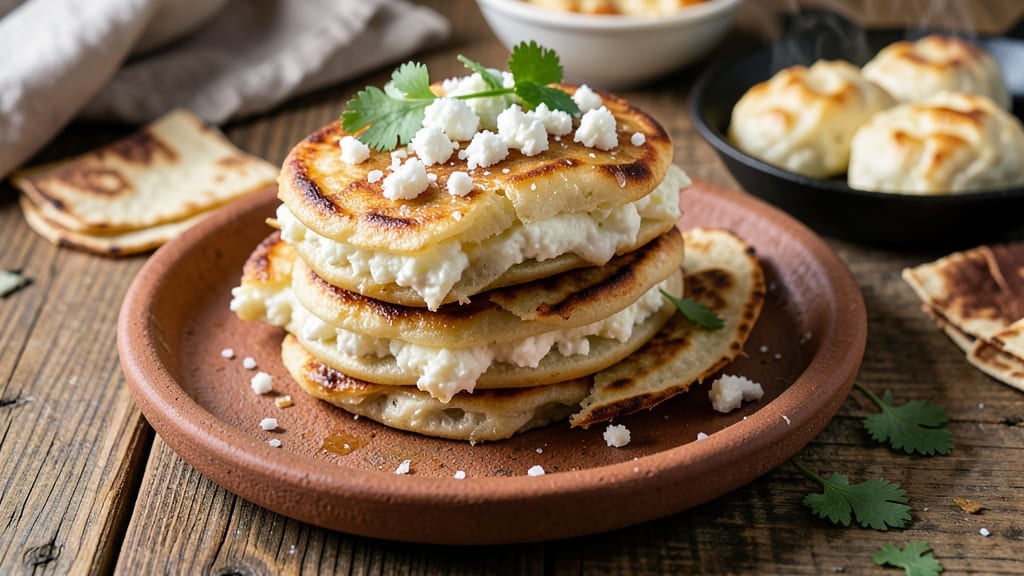
This authentic cheese pupusa recipe brings the crispy, gooey goodness of Central America's beloved street food to your kitchen. 🌟 The secret lies in the perfect balance of masa dough and melted queso fresco, a technique I've perfected after countless batches—each one better than the last.
What makes these pupusas special is their signature texture: a crispy exterior that gives way to a tender, cheesy center, all achieved through precise heat control and traditional shaping methods.
Central to this recipe is the masa dough, made from cornmeal and lard—a key ingredient that gives pupusas their authentic flavor and texture. The filling consists of freshly grated queso fresco, which melts beautifully without turning rubbery, creating that irresistible gooey pull when you bite in.
This recipe stays true to Salvadoran traditions while being approachable for home cooks, with clear instructions for shaping, frying, and serving.
By following these steps, you'll achieve pupusas with golden-brown edges and perfectly tender interiors, ready to be served with curtido (a tangy cabbage slaw) or simply enjoyed as-is. The aroma alone will transport you to the bustling streets of San Salvador, where these crispy delights are a staple.
Each bite delivers that satisfying contrast of textures and flavors that makes pupusas so universally loved.
Whether you're hosting a gathering or simply craving a taste of Central America, this recipe delivers restaurant-quality results with minimal fuss. The key is patience—letting the dough rest, shaping with care, and frying at the right temperature ensures every pupusa turns out perfectly.
Let's get started on creating your own batch of authentic Salvadoran street food.
Ingredients for authentic cheese pupusa
Six ingredients, Salvadoran soul—all you need for crispy, cheesy pupusa perfection.
| Ingredient | Amount | Notes |
|---|---|---|
| Masa Harina (Cornmeal Flour) 🌽 | 3 cups | Maseca or P.A.N. brand preferred |
| Lard 🍖 | ½ cup | Rendered pork fat, not vegetable oil |
| Warm Water 💧 | 1 ½ cups | 100-110°F for ideal dough |
| Queso Fresco 🧀 | 2 cups | Freshly grated, crumbly variety |
| Salt 🧂 | 1 tsp | Kosher or sea salt |
| Vegetable Oil 🫒 | 4 cups | For deep frying, high smoke point |
| All-Purpose Flour 🌾 | ½ cup | For dusting work surface |
| Cumin Seeds 🌿 | 1 tsp | Toasted for aroma, optional |
| Lemon Juice 🍋 | 1 tbsp | Freshly squeezed, for brightness |
| Curtido (Optional) 🥬 | 2 cups | Store-bought or homemade slaw |
The masa harina is non-negotiable—Maseca or P.A.N. brands are the gold standard, and you'll find them in the Latin aisle of most grocery stores. If you can't find them, Bob's Red Mill cornmeal works in a pinch, but it won't be quite the same. Lard is the secret to authentic flavor and texture, so don't swap for vegetable oil unless you're okay with a less traditional result. Render your own from pork fat if you're feeling ambitious, or grab pre-rendered from the butcher section. Warm water is key here—too hot and your dough will cook instead of hydrate. Aim for 100-110°F; if you don't have a thermometer, just make sure it's comfortably warm to the touch.
No queso fresco? Cotija cheese is your next best bet—it's saltier and crumblier, so adjust the salt in the dough accordingly. For a vegetarian option, fresh mozzarella or farmer's cheese works, but it won't have that same melt-in-your-mouth quality. The cumin seeds are optional but add a lovely earthiness—toast them in a dry pan for 30 seconds to deepen their flavor before grinding. If you're making curtido from scratch, white vinegar and a touch of sugar are your friends for that perfect tangy crunch. And for the love of pupusas, use a deep fry thermometer—keeping the oil at 350°F is the difference between golden perfection and greasy disappointment.
Masa dough keeps for 3 days in the fridge, wrapped tightly in plastic. The queso fresco? Use it all or freeze any extras—it loses its magic once opened. Frying oil can be reused 2-3 times if you strain and store it properly. Portion your dough into golf-ball-sized balls before shaping to save time later. And here's a pro tip: keep a bowl of warm water nearby while frying—dip your fingers in it occasionally to keep the dough from sticking. These reheat beautifully in a skillet with a splash of water, steamed for about 5 minutes—perfect for leftovers.
Why You'll Love This Recipe
- No-Fuss Dough: I swear by this recipe—just mix masa harina, lard, and warm water. No kneading, no waiting, no stress. The dough comes together faster than you can say "queso fresco."
- Melty Magic: That gooey, stretchy queso fresco inside? It’s the star. The lard keeps it crispy outside while the cheese turns molten—every bite is like a warm hug for your mouth.
- Party in a Pocket: These are my go-to for game days, potlucks, or lazy Sundays. Serve them with curtido (that tangy cabbage slaw) and watch them disappear. Honestly, they’re the easiest crowd-pleaser ever.
- Budget Bites: A bag of masa harina and queso fresco stretch for weeks. Freeze extras, reheat in seconds—no takeout needed. My wallet (and my family) thank me every time.
Step-by-step instructions for authentic cheese pupusa recipe
Here’s how to make crispy, golden pupusas with that perfect gooey center—just like in El Salvador.
👨🍳 Step 1: Make the Dough with Lard and Warm Water
In a large bowl, combine the 3 cups masa harina and 1 tsp salt. Add the 0.5 cup lard and mix with your hands or a fork until crumbly. Gradually pour in the 1.5 cups warm water (around 100-110°F) while stirring. The dough should come together into a soft, pliable ball—if it’s too dry, add a splash more water.
I like to toast the 1 tsp cumin seeds in a dry skillet for 30 seconds first—they add a warm, earthy aroma that pairs perfectly with the cheese. Once cool, mix them into the dough. Knead for 2-3 minutes until smooth. Cover with a damp towel and let rest for 15 minutes while you prep the filling.
🥘 Step 2: Assemble Pupusas with Queso Fresco
Divide the dough into 6 equal balls (about 4 oz each). Roll one into a 4-inch circle—don’t press too hard or it’ll tear. Place ⅓ cup queso fresco in the center, then fold the dough over and seal the edges by pinching gently. Press lightly to form a ½-inch thick disc. Repeat with the remaining dough.
Here’s the thing—don’t overwork the dough when sealing. Just enough pressure to hold the cheese inside, or it’ll burst when frying. If the dough feels sticky, dip your hands in water to prevent sticking. Keep the assembled pupusas covered while you fry them.
🔥 Step 3: Fry Until Golden and Crispy
Heat 2 cups vegetable oil in a deep skillet over medium-high heat until it reaches 350°F (use a thermometer—this is key!). Fry 2 pupusas at a time, turning occasionally, for 3-4 minutes until golden brown on all sides. The oil should sizzle gently, and the pupusas should float—if they sink, they’re undercooked.
Drain on paper towels, then sprinkle with a pinch of salt and a drizzle of lemon juice while still hot. The acid brightens the flavors and cuts through the richness of the cheese. If you’re using curtido, serve it on the side for dipping—it adds that tangy crunch that balances everything.
⏰ Step 4: Serve Warm with Curtido (If Using)
Serve the pupusas immediately while they’re crispy outside and gooey inside. The cheese should melt just enough to ooze slightly when you cut into one—this is the magic of Salvadoran pupusas! If you’re feeling fancy, brush the tops with a little more lemon juice for extra zing.
Real talk: these are best eaten fresh, straight from the fryer. The crunch disappears fast, and the cheese cools too quickly. Pair with curtido (that tangy cabbage slaw) and maybe a cold beer—trust me, it’s the full experience.
Pro Tips For Making Authentic Cheese Pupusa
- KNEAD UNTIL SILKY: Stop when the dough stretches like wet window glass—no need for overworking it. I used to pull until my arms ached, but the moment it springs back smoothly (about 3-4 minutes) is when the texture gets that perfect, tender bite.
- CHILL THE DOUGH: Wrap the masa in plastic and refrigerate for 30 minutes before shaping—it tightens up and won’t stick to your hands. After burning my fingers trying to handle sticky dough, this became my non-negotiable step.
- SALT THE QUESO: Toss crumbled queso fresco with a pinch of salt before mixing into the dough—it brightens the flavor without overpowering. I learned this the hard way when my first batch tasted bland, even with salted lard.
- COOK IN BATCHES: Use a well-seasoned comal or nonstick skillet, and cook 2-3 pupusas at a time over medium-high heat. Crowding them steams the dough instead of crisping—my first batch was soggy because I tried to rush it all at once.
Troubleshooting this dish
Dough Too Dry
If your masa dough feels like sand instead of a soft ball, you’ve likely added too much masa or not enough warm water. I’ve found that 1.5 cups warm water (around 100-110°F) is the sweet spot for 3 cups masa harina.
Gradually add 1 tbsp warm water at a time until the dough holds together when pressed. Over-kneading can also dry it out—just mix until combined, then rest. If the dough cracks while shaping, it’s a sign it needs more moisture. 💧
Cheese Leaking
Bursting cheese is a classic pupusa fail, but it’s usually due to overfilling or improper sealing. Use ⅓ cup queso fresco per pupusa—any more and it’ll escape during frying. When folding, pinch the edges firmly but gently to create a tight seal.
If the dough feels too sticky, wet your fingers slightly to prevent sticking while shaping. A well-sealed pupusa will hold its filling beautifully. 🧀
Pupusas Sinking
If your pupusas sink instead of floating, your oil isn’t hot enough. The magic number is 350°F—use a deep fry thermometer to confirm. If the oil is too cool, the dough will absorb oil and turn greasy.
Fry in batches of 2 pupusas at a time to maintain temperature. Gently press down once with a slotted spoon to help them float if needed. 🔥
Uneven Cooking
Uneven browning happens when oil temperature fluctuates. Keep your fryer at a steady 350°F and avoid overcrowding the pan. If one side browns faster, rotate the pupusas more frequently.
A heavy-bottomed cast iron skillet helps maintain even heat better than nonstick. For extra crispiness, fry for 3-4 minutes total, turning occasionally. ✨
Dough Sticking
Sticky dough is a common frustration, but it’s easy to fix. Dust your work surface with all-purpose flour before rolling, and keep a bowl of warm water nearby to dip your fingers in while shaping.
If the dough sticks to the pan while frying, your oil isn’t hot enough—adjust to 350°F and try again. A lightly oiled rolling pin can also help prevent sticking. 💡
Cheese Not Melting
If your queso fresco stays stubbornly solid, it might be too cold or not fresh enough. Grate the cheese just before assembling the pupusas to keep it at room temperature. For extra meltiness, add 1 tsp warm water to the cheese while mixing—this helps it soften during frying.
If using cotija, reduce the salt in the dough slightly since it’s saltier. 🌶️
Nutrition facts
Frequently asked questions about authentic cheese pupusas
Can I make pupusas without lard?
While lard gives authentic flavor, you can substitute with vegetable shortening or even butter for a dairy-based version. Just use the same amount (0.5 cup) and expect a slightly different texture—less crispy but still delicious. For a neutral oil option, avocado oil works well when rendered.
What's the best way to reheat leftover pupusas?
Reheat in a dry skillet over medium heat for 2-3 minutes per side until crispy again. For extra moisture, add a splash of water to the pan. Microwaving works in a pinch but makes them soggy—avoid this method for best results. Leftovers keep well for 2 days in the fridge.
Can I make pupusas with other fillings?
Traditional fillings include chicharrón (pork rinds), loroco (flower buds), or ayote (squash). For cheese variations, try mixing queso fresco with crema or adding chipotle peppers for heat. Just reduce the cheese amount slightly to maintain structure.
Why do my pupusas turn out greasy?
Greasy pupusas usually mean the oil was too cool (below 350°F) or the dough absorbed too much oil. Always use a thermometer and fry in batches of 2 pupusas to maintain temperature. Drain on a wire rack instead of paper towels for 30 seconds to remove excess oil.
How do I make curtido for serving?
Mix 2 cups shredded cabbage, 1 small carrot (julienned), 1 tsp salt, 1 tsp white vinegar, and 1 tsp sugar. Let sit for 30 minutes before serving. For extra tang, add 1 tbsp lime juice. Store leftovers in the fridge for up to 5 days.