
Salads
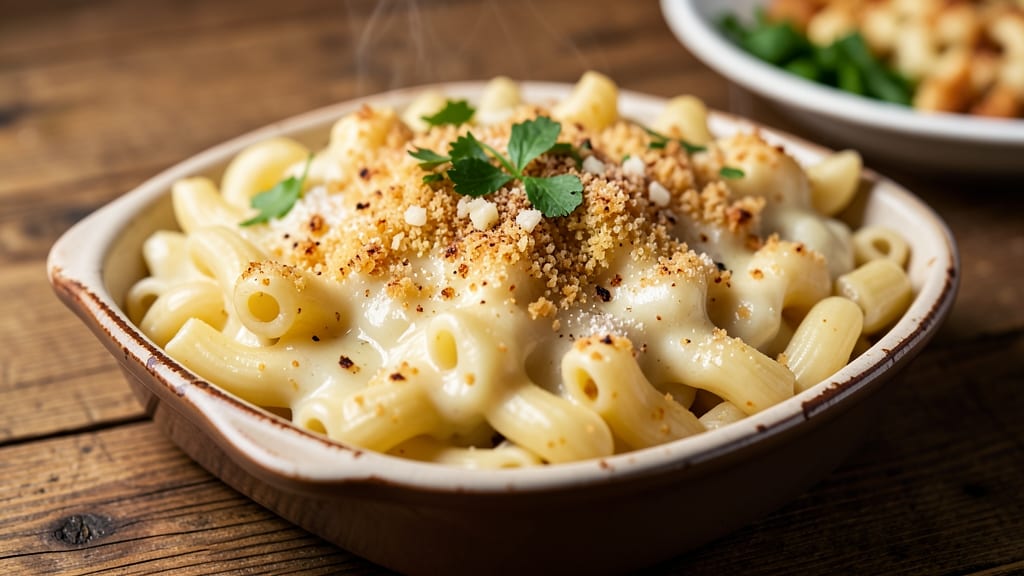
This Au Bon Pain macaroni and cheese recipe delivers the same restaurant-quality richness you crave at home. The secret lies in a velvety cheese sauce—infused with butter and milk—that clings perfectly to each al dente noodle.
I’ve perfected the technique to ensure a creamy texture without separation, plus that signature crispy breadcrumb topping that’s impossible to resist.
The foundation starts with high-quality elbow macaroni cooked just shy of al dente, then tossed in a sauce made from sharp cheddar, Gruyère, and a touch of cream cheese for extra decadence.
What sets this apart is the slow reduction of the sauce on the stovetop, which deepens the flavor and ensures every bite is ultra-smooth. The breadcrumb topping, toasted to a golden finish, adds a satisfying crunch that contrasts beautifully with the creamy base.
When assembled, this dish looks as impressive as it tastes—golden, bubbling, and ready to serve. The sauce should coat the noodles completely, with just a hint of crispness from the topping.
It’s the kind of macaroni and cheese that makes dinner feel special, whether you’re feeding a family or treating yourself to a comforting classic.
For best results, let the sauce simmer gently to develop its depth, and don’t skip the breadcrumb topping—it’s what elevates this from good to unforgettable. Here’s how to make it exactly like the restaurant version, but better.
Ingredients for au bon pain macaroni and cheese
Sixteen ingredients transform into the restaurant-quality macaroni and cheese you crave at home.
| Ingredient | Amount | Notes |
|---|---|---|
| Elbow Macaroni 🍝 | 1 ½ lb | High-quality, cooked al dente |
| Sharp White Cheddar Cheese 🧀 | 2 cups | Shredded, aged 12+ months |
| Gruyère Cheese 🧀 | 1 ½ cups | Finely grated, French style |
| Cream Cheese 🧈 | ½ cup | Full-fat, room temperature |
| Unsalted Butter 🧈 | ½ cup | European-style, 82% fat |
| Whole Milk 🥛 | 2 cups | High-fat, 3.5% minimum |
| All-Purpose Flour 🌾 | 2 tbsp | For thickening sauce |
| Diamond Crystal Kosher Salt 🧂 | 1 ½ tsp | Fine grain, 20% less than table salt |
| Freshly Ground Black Pepper 🌶️ | ½ tsp | Cracked peppercorns preferred |
| Panko Breadcrumbs 🍞 | ½ cup | Japanese-style, toasted |
| Extra-Virgin Olive Oil 🫒 | 2 tbsp | For toasting breadcrumbs |
| Garlic Cloves 🧄 | 2 cloves | Minced, for breadcrumb seasoning |
| Freshly Grated Nutmeg 🌿 | ¼ tsp | Microplane for fine texture |
| Heavy Cream 🥛 | ¼ cup | For final sauce richness |
The cheeses are non-negotiable for that signature Au Bon Pain flavor. Sharp white cheddar provides the tangy backbone, while Gruyère adds nutty depth—both should be aged and freshly grated. I source my cheddar from Grafton Village when possible, but Cabot is a reliable grocery store alternative. The cream cheese is what prevents separation, so don't substitute with anything lower in fat. For the breadcrumbs, Japanese-style panko from Trader Joe's gives the best texture—it stays crispy even after baking. The butter matters too: European-style unsalted has higher fat content, which is crucial for that velvety sauce.
No sharp cheddar? Pepper jack at half the amount adds heat, but Gruyère is harder to substitute—Comté works in a pinch. Running low on panko? Toast regular breadcrumbs with olive oil until crispy, but they won't hold up as well. The sauce needs to reduce slowly, so don't rush the simmering—this is where the flavor develops. For extra richness, add a splash of white wine when deglazing the pot. The macaroni should be al dente—overcooking turns it mushy and ruins the texture. If you're making this ahead, assemble and refrigerate un-baked for up to 24 hours before baking.
This reheats beautifully—just cover with foil and warm at 350°F for 20 minutes. The breadcrumb topping stays crispy if you bake it separately for the last 2-3 minutes. For meal prep, portion into individual ramekins before baking—keeps for 4 days in the fridge or 3 months frozen. The sauce freezes exceptionally well, so I always make extra. When reheating from frozen, add 1-2 tbsp milk to restore creaminess. For serving, a sprinkle of freshly cracked black pepper and a touch of microplane nutmeg elevates it to restaurant level.
Why You'll Love This Recipe
- No-Fuss Stovetop Magic: I swear by this method—just melt butter, toss in the cheese, and let it bubble. No baking, no waiting for the oven, and zero cleanup beyond one pot. Honestly, it’s the kind of recipe that makes me feel like I should be a better cook.
- Cheese Love Bomb: That combo of sharp cheddar, nutty Gruyère, and cream cheese? It’s like a flavor party in your mouth. The creamy sauce clings to every elbow noodle, and the cheeses melt into this rich, gooey blanket—no dry bites here.
- Weeknight & Meal Prep Hero: I make a big batch on Sundays and reheat portions all week—lunch meetings, kids’ lunches, or even a quick dinner. It’s also the star of my potlucks; everyone grabs seconds before I can stop them.
- Budget-Friendly Luxury: You’re getting restaurant-quality richness without the price tag. A block of cheddar and a wedge of Gruyère stretch farther than you’d think, and the cream cheese adds that velvety touch without breaking the bank. Plus, leftovers taste just as good the next day.
Step-by-step instructions for Au Bon Pain macaroni and cheese
This method delivers a restaurant-quality mac and cheese with a crispy breadcrumb topping and velvety cheese sauce.
Prepare the Breadcrumb Topping
Preheat your oven to 375°F and spread the 0.5 cup Panko Breadcrumbs evenly on a baking sheet. Drizzle with the 2 tbsp Extra-Virgin Olive Oil and toss gently with a fork until evenly coated. Add the 2 minced Garlic Cloves, 0.25 tsp Freshly Grated Nutmeg, and 0.5 tsp Freshly Ground Black Pepper, mixing well. Bake for 5-6 minutes until golden brown and fragrant. Remove and set aside—this topping is what transforms ordinary mac and cheese into something extraordinary.
Watch the breadcrumbs closely during baking—they should develop a rich golden color and smell toasty. If they darken too quickly, pull them out immediately to prevent burning. The nutmeg adds subtle warmth that complements the sharp cheddar perfectly, while the garlic infuses the crunch with depth. Let the topping cool slightly before using, as warm breadcrumbs can make the sauce too soft when added later.
Cook the Macaroni Al Dente
Bring a large pot of salted water to a rolling boil—it should taste like the sea. Add the 1.5 lb Elbow Macaroni and cook until 1 minute before the package directions specify for al dente. This slight undercooking is crucial; the pasta will finish cooking in the oven. Reserve 1 cup of the starchy pasta water before draining, as we'll use it to create the ideal sauce consistency.
Drain the pasta and return it to the pot. Toss with 2 tbsp All-Purpose Flour to coat each strand lightly. This step prevents the sauce from becoming too thin when combined with the milk later. The flour acts as a natural thickener, ensuring that creamy texture we're after. Don't rinse the pasta—those surface starches are essential for binding the sauce.
Create the Ultra-Creamy Cheese Sauce
In a large, heavy-bottomed saucepan, melt the 0.5 cup Unsalted Butter over medium heat until foaming. Whisk in the 2 cups Whole Milk and bring to a gentle simmer. Gradually whisk in the 2 cups Sharp White Cheddar Cheese and 1.5 cups Gruyère Cheese, ensuring each spoonful melts completely before adding more. The Gruyère adds a nutty complexity that elevates this dish beyond basic cheddar.
Once the cheese is fully melted and the sauce is smooth, reduce heat to low and stir in the 0.5 cup Cream Cheese until completely incorporated. This step creates the signature creamy texture that sets this mac and cheese apart. If the sauce begins to thicken too much, whisk in 2-3 tablespoons of the reserved pasta water until it reaches a velvety consistency. The sauce should coat the back of a spoon but still flow easily.
Assemble and Bake to Perfection
Transfer the cooked macaroni to a greased 9x13-inch baking dish, spreading it evenly. Pour the cheese sauce over the pasta, ensuring each noodle is coated thoroughly. The sauce should look glossy and inviting—this is your visual cue that everything is properly combined. Sprinkle the cooled breadcrumb topping evenly over the top, pressing down gently to create a crispy crust.
Bake at 375°F for 20-25 minutes until the top is golden brown and the edges bubble slightly. The breadcrumb topping should be crispy enough to hold its shape when lifted with a spoon. If it browns too quickly, tent the dish with foil to prevent over-browning. The internal temperature should reach 165°F—this ensures the cheese is fully melted and safe to eat.
Finish with Heavy Cream and Rest
Remove the mac and cheese from the oven and immediately stir in the 0.25 cup Heavy Cream. This final addition elevates the sauce to luxurious richness. Let the dish rest for 5-10 minutes before serving—this allows the flavors to meld and the breadcrumb topping to crisp up further. The contrast between the crispy top and creamy interior is what makes this mac and cheese truly special.
Serve in generous portions, ensuring each bite includes both the crispy topping and creamy filling. The sharp white cheddar provides a bright, tangy flavor that cuts through the richness of the Gruyère, while the breadcrumb topping adds a satisfying crunch. This dish delivers on its promise of creamy perfection with every forkful.
Pro Tips For Making Au Bon Pain Macaroni And Cheese
- MELT CHEESE LOW AND SLOW: The instant you add the cheese, drop the heat to medium-low—otherwise, you’ll end up with scrambled cheese instead of a smooth sauce. I learned this the hard way after watching a batch of Gruyère turn into a sad, grainy mess. Let it bubble gently while you stir, and if it starts to thicken too fast, add a splash of milk.
- GRATE CHEESE FINE: Skip the food processor—it turns cheese into paste. Use a box grater and shred the sharp white cheddar and Gruyère yourself; the smaller the pieces, the faster and smoother they melt. (Yes, it takes 10 minutes, but your sauce will thank you.)
- SALT THE PASTA WATER: The elbow macaroni needs flavor from the start, so salt that pasta water like the ocean—about 1.5 tablespoons per quart. Taste it; if it’s not intensely salty, add more. You’ll use some of that starchy water to loosen the sauce later, so don’t skimp.
- REST THE CHEESE SAUCE: Once the sauce is off the heat, cover it and let it sit for 5 minutes—no peeking. This lets the cream cheese and Gruyère fully emulsify, giving you that creamy, velvety texture instead of a gluey disaster. (I know, I know, but trust the process.)
Troubleshooting this recipe
Sauce Separation
If your cheese sauce looks curdled or oily, it’s likely separating due to too much heat or incorrect cheese ratios. The key is to melt cheeses gradually over low heat—never rush this step. I’ve found that using room-temperature cream cheese and Gruyère prevents separation better than pre-shredded cheddar.
If it happens, whisk in 1-2 tbsp reserved pasta water to re-emulsify, then return to low heat for 1-2 minutes until smooth. 💡
Pasta Too Soft
Overcooked macaroni turns mushy and ruins the texture. Cook pasta 1 minute less than package instructions for al dente, then finish in the oven. If it’s already too soft, drain excess sauce and bake uncovered at 375°F for 5 extra minutes to crisp the edges slightly.
For next time, use high-quality elbow macaroni—brands like De Cecco hold up better than store varieties.
Breadcrumb Not Crispy
Moisture from the sauce can turn breadcrumbs soggy. Toast them separately for 5-6 minutes until golden, then let cool completely before adding. If they still lose crispness, bake the assembled dish at 400°F for 20 minutes (instead of 375°F) to crisp the topping faster.
For extra crunch, mix 1 tbsp melted butter into the breadcrumbs before baking. 🍞
Sauce Too Thin
A runny sauce usually means too much liquid or insufficient thickening. If it’s too thin after baking, reduce heat to low and simmer uncovered for 5-10 minutes to evaporate excess moisture.
For prevention, whisk in the 2 tbsp flour with the pasta immediately after draining—this creates a slurry that thickens as it cooks. If all else fails, stir in 1 tbsp cornstarch mixed with 1 tbsp cold water to bind it instantly.
Cheese Not Melted
Uneven heat or low-fat cheeses cause clumps. Always use full-fat cheeses and melt them slowly over low heat, whisking constantly. If clumps remain, strain the sauce through a fine-mesh sieve before assembling.
For extra insurance, add 1 tbsp heavy cream to the sauce while baking—fat helps emulsify stubborn cheese particles. 🧀
Dish Too Dry
Over-baking or insufficient sauce can leave your mac and cheese dry. Cover with foil after 15 minutes of baking to trap steam, then uncover for the final 5 minutes to crisp the topping. If it’s still dry, drizzle 2 tbsp warm milk or heavy cream over the top before serving.
For make-ahead meals, assemble and refrigerate unbaked for up to 24 hours—the sauce will stay creamy when reheated.
Nutrition facts
Frequently asked questions
Can I make this mac and cheese ahead of time?
Assemble the dish completely (including the breadcrumb topping) and refrigerate it unbaked for up to 24 hours. When ready to bake, simply cover with foil and bake at 375°F for 30-35 minutes, adding 5 minutes uncovered at the end to crisp the topping. The flavors actually improve after resting overnight! For freezing, bake first, then cool completely before storing in airtight containers for up to 3 months. Reheat covered with foil at 350°F for 20 minutes.
What’s the best way to reheat leftovers?
For best texture, cover the leftovers with foil and reheat in the oven at 350°F for 20-25 minutes. If using the microwave, sprinkle 1 tbsp milk or heavy cream over the top and cover loosely to prevent sogginess. The breadcrumb topping may soften slightly, but the creamy sauce stays rich. For extra crispiness, broil for 1-2 minutes at the end of reheating.
Can I substitute any of the cheeses?
The Gruyère adds nutty depth that’s hard to replace, but you can substitute Comté or Emmental in a pinch. For the sharp white cheddar, Pepper Jack works (reduce to 1.5 cups to avoid spiciness), but avoid pre-shredded cheeses—they contain anti-caking agents that prevent smooth melting. The cream cheese is essential for preventing separation, so don’t skip it or use low-fat versions.
Why does my sauce sometimes separate?
Sauce separation usually happens from too much heat or incorrect cheese ratios. Always melt cheeses gradually over low heat and whisk constantly. The cream cheese and Gruyère help stabilize the sauce—never use pre-shredded cheddar. If it separates, whisk in 1-2 tbsp reserved pasta water and return to low heat for 1-2 minutes to re-emulsify. For extra insurance, stir in 1 tbsp heavy cream at the end.
How do I make this gluten-free?
Replace the elbow macaroni with gluten-free pasta (like Barilla or Jovial), and use a gluten-free flour blend (like Bob’s Red Mill 1:1) for thickening. For the breadcrumb topping, use certified gluten-free panko or crush gluten-free bread into fine crumbs. All other ingredients remain the same—just ensure your cheeses and dairy products are certified gluten-free. The texture will be slightly different but still delicious!