
Appetizers
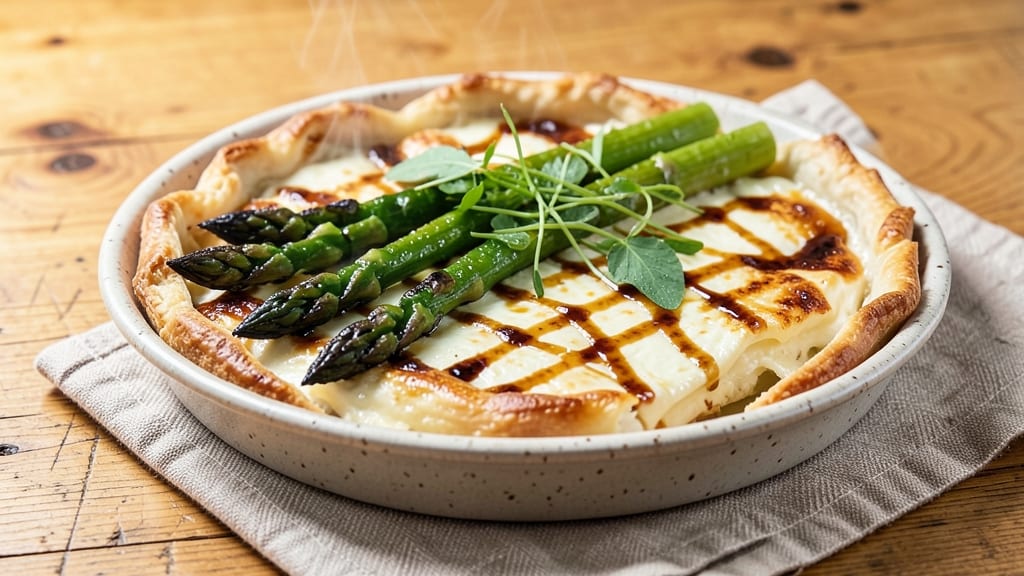
This asparagus goat cheese and tarragon tart recipe delivers an elegant appetizer that balances rustic crust with sophisticated herb-forward filling. The secret lies in a crisp, herb-infused crust that contrasts beautifully with the gooey rivers of goat cheese and tender asparagus.
I developed this recipe after years of perfecting the balance between traditional tart techniques and modern herb-forward flavors—each bite offers a perfect harmony of textures and tastes.
The foundation begins with a buttery, flaky crust that bakes to golden perfection, while the filling transforms simple ingredients into something extraordinary. Sautéed asparagus adds freshness and a subtle crunch, while the goat cheese melts into luscious, golden rivers.
Tarragon brings an aromatic depth that elevates the dish from ordinary to extraordinary—its anise-like notes complement the tangy cheese and earthy asparagus beautifully.
What makes this tart truly special is how the components come together: the crisp crust provides structure, the creamy cheese adds richness, and the tender asparagus introduces a delightful contrast in texture.
The result is an appetizer that’s impressive enough for dinner parties but simple enough for a weeknight gathering. Every element is designed to work in perfect balance, ensuring restaurant-quality results at home.
Once baked, the tarts develop a golden crust with pockets of melted cheese that pull slightly when cut—this is the hallmark of a perfectly executed tart.
The aroma alone will draw guests to the table, and the first bite delivers a symphony of flavors and textures that make this dish unforgettable. Ready to impress? Let’s get started.
Ingredients for asparagus goat cheese and tarragon tart
Fourteen ingredients transform into an elegant tart with golden crust and creamy cheese rivers.
| Ingredient | Amount | Notes |
|---|---|---|
| All-Purpose Flour 🌾 | 1 ½ cups | Sifted for light texture |
| Unsalted Butter 🧈 | ¾ cup | Cold, cubed for flaky crust |
| Granulated Sugar 🍚 | ¼ cup | Fine grain preferred |
| Large Egg 🥚 | 1 whole | Room temperature for blending |
| Ice Water 💧 | ⅓ cup | Chilled for dough consistency |
| Fresh Tarragon Leaves 🌿 | ¼ cup | Finely chopped for infusion |
| Fresh Chives 🌱 | ⅛ cup | Minced for herb brightness |
| Asparagus Spears 🌱 | 1 lb | Thin, trimmed to 3-inch pieces |
| Goat Cheese 🧀 | 8 oz | Soft, creamy variety preferred |
| Extra-Virgin Olive Oil 🫒 | ¼ cup | Light, fruity variety |
| Fresh Tarragon 🌿 | 1 tbsp | Slivered for garnish |
| Sea Salt 🧂 | 1 ½ tsp | Diamond Crystal preferred |
| Freshly Ground Black Pepper 🌶️ | ½ tsp | Cracked for aroma |
| Garlic Cloves 🧄 | 2 cloves | Minced for sautéing |
The crust's success hinges on cold butter and precise flour measurement—weigh your ingredients for consistency. Whole Foods or King Arthur Flour offer reliable all-purpose flour for this delicate crust. Tarragon is non-negotiable; its anise notes elevate the dish, so fresh from a specialty market ensures optimal flavor. For the goat cheese, Mont Saint-Michel or Crottin de Chavignol deliver the perfect balance of tang and creaminess. Prep the asparagus by trimming woody ends and slicing spears into even 3-inch pieces for uniform baking.
No fresh tarragon? Dried at one-third the amount works in a pinch, though flavor will differ. Substitute goat cheese with creamy brie or camembert for richer results. For the crust, butter-flavored shortening can replace butter if dietary restrictions apply, though texture will vary. The olive oil should be light and fruity—avoid robust varieties that may overpower. If asparagus is unavailable, fresh spinach or zucchini> adds moisture to the filling. Always taste the goat cheese mixture before baking—seasoning adjustments at this stage prevent over-salted tarts.
Store unbaked tart shells in the refrigerator for up to 2 days or freeze for 1 month before baking. Assembled tarts keep in the fridge for 3 days—reheat at 350°F for 8-10 minutes to restore crispness. For make-ahead convenience, bake the crusts, freeze, then fill and bake fresh when ready. The goat cheese filling can be prepped 1 day ahead and stored in the fridge, saving time on serving day. Garnish with fresh tarragon just before serving to preserve its vibrant aroma.
Why You'll Love This Recipe
- No-Roll Crust Shortcut: I swear by this cold butter dough—just mix, pat, chill. No stand mixer, no fuss, and it’s actually flaky without the effort. The sugar in the dough caramelizes just enough to give that subtle sweetness you’d never expect.
- Tarragon Magic: That fresh tarragon? It’s the star. A pinch goes a long way—bright, anise-like, and it cuts through the richness of the goat cheese like a cool breeze. Honestly, store-bought tarragon works fine, but if you’ve got a bunch, freeze it now.
- Weeknight Dinner Upgrade: This tart feels fancy but takes less time than ordering takeout. Serve it warm with a simple salad for a lunch that feels like a treat, or let it cool for a picnic-worthy snack. My husband always grabs seconds—no one suspects how little work went into it.
- Leftovers That Don’t Suck: Unlike most tarts, this one reheats beautifully. Slice it up the next day, toast until golden, and it’s basically a free breakfast or a quick office lunch. I’ve even packed it in my thermos—it holds up better than you’d think.
Step-by-step instructions for asparagus goat cheese and tarragon tarts
Mastering these delicate tarts requires precision in layering and timing—here's how to achieve the perfect balance of crisp crust, herbed filling, and gooey goat cheese rivers.
Prepare the Herb-Infused Dough
In a food processor, pulse together the 1.5 cups all-purpose flour and 1.5 teaspoons sea salt until combined. Add the 0.75 cup cold cubed unsalted butter and process until the mixture resembles coarse crumbs with pea-sized butter pieces remaining. This texture is crucial for achieving that signature flaky crust.
Transfer the dough to a large bowl and mix in the 0.25 cup granulated sugar, 0.25 cup finely chopped fresh tarragon leaves, and 0.125 cup minced fresh chives. The herbs will infuse the entire tart with their bright, anise-like aroma. Add the 1 whole large egg and pulse briefly in the food processor to emulsify, then combine with the dry ingredients by hand using a silicone spatula.
Drizzle in the 0.33 cup ice water while mixing until the dough just comes together. Avoid overworking it—just until the mixture holds when pressed. Shape into a disk, wrap in plastic, and chill for at least 1 hour or up to 24 hours. This resting period allows the gluten to relax, ensuring tender layers rather than tough, chewy crusts.
Roll and Blind-Bake the Crusts
Preheat your oven to 375°F. On a lightly floured surface, roll out the chilled dough to 1/8-inch thickness—about 12 inches in diameter for a single tart. Transfer to a parchment-lined baking sheet and gently press into a tart pan with a removable bottom, trimming any excess dough hanging over the edges.
Line the crust with parchment paper, fill with pie weights or dried beans, and bake for 15 minutes. Remove the weights and bake for an additional 10 minutes until the edges are light golden brown and the base is set but still slightly pale. This blind-baking step prevents soggy crusts when the filling is added later. Keep the baked crusts warm in the oven while you prepare the filling.
Sauté Asparagus and Prepare the Goat Cheese Filling
While the crusts bake, trim the 1 lb asparagus spears to 3-inch lengths and cut each spear diagonally into 1-inch pieces. Heat 0.25 cup extra-virgin olive oil in a large skillet over medium-high heat. Add the 2 minced garlic cloves and cook for 30 seconds until fragrant, then add the asparagus and 0.5 teaspoon freshly ground black pepper. Sauté for 4-5 minutes until the asparagus is tender-crisp with just a hint of char on the edges.
Transfer the asparagus to a bowl and let it cool slightly. In the same skillet, reduce heat to medium-low and add the 8 oz goat cheese, stirring gently until it begins to soften and melt into a creamy consistency. Remove from heat and fold in the 1 tablespoon slivered fresh tarragon and any accumulated juices from the asparagus. The filling should be smooth but still hold its shape when piped.
Assemble and Bake the Tarts
Spread the goat cheese mixture evenly over the baked crusts, leaving a 1/2-inch border around the edges. Arrange the sautéed asparagus pieces in a circular pattern over the cheese, slightly overlapping them for visual appeal. The asparagus should peek through the cheese rivers when the tarts are served.
Bake at 375°F for 12-15 minutes until the cheese is bubbling gently at the edges and the asparagus is heated through. The centers should still be slightly soft—this ensures the goat cheese maintains its creamy texture rather than becoming rubbery. If the crust starts to brown too quickly, tent loosely with foil.
Finish and Serve
Remove the tarts from the oven and let them rest for 5 minutes to set slightly. Use a sharp knife to cut into 4 equal wedges, being careful to maintain the integrity of the crust edges. Garnish each wedge with an additional sprinkle of slivered fresh tarragon and a pinch of flaky sea salt for brightness.
Serve immediately while the goat cheese is still warm and gooey. The contrast between the crisp, herbed crust, the tender asparagus, and the creamy cheese rivers creates a harmonious balance of textures and flavors. For best results, serve these tarts as an appetizer with a crisp white wine or sparkling water to complement the herbaceous notes.
Pro Tips For Making Asparagus Goat Cheese And Tarragon Tart
- CHILL THE GOAT CHEESE: Blending goat cheese straight from the fridge into your filling keeps it from turning greasy—trust me, I’ve seen it happen. Take it out 10 minutes before mixing, but don’t let it sit at room temp longer than that, or you’ll end up with a runny mess when baking.
- SALT THE CRUST WATER: The crust’s secret lies in the ice water, not just the flour. Mix in ½ teaspoon salt per cup of water—it crisps the edges and balances the tangy goat cheese. I used to skip this, and the crust always tasted flat.
- DON’T OVERWORK THE DOUGH: This isn’t pie dough—handle it like a delicate pastry. Once you’ve mixed the butter into the flour, just fold until it resembles coarse crumbs. Overworking it makes the crust tough, and nobody wants a chewy tart base.
- PRE-ROAST THE ASPARAGUS: Blanch the asparagus for 2 minutes in boiling water, then plunge into ice water to stop cooking. This keeps it bright green and tender-crisp when you layer it in later—no more mushy spears ruining the presentation. (Yes, even if you’re impatient like me.)
Serving suggestions for this dish
Wine Pairings
A crisp Sauvignon Blanc from New Zealand or Loire Valley is my go-to pairing—its bright acidity and citrus notes cut through the richness of the goat cheese while complementing the tarragon's anise undertones.
Look for wines with honeydew melon or grapefruit on the label, like Cloudy Bay or Oyster Bay. The slight herbal notes in these wines mirror the tarragon, creating a harmonious match. 🍷
Beverage Alternatives
For non-alcoholic options, sparkling mineral water with a squeeze of lemon enhances the dish's freshness. I love Perrier or San Pellegrino—the effervescence cleanses the palate between bites. Another great choice is green tea, specifically jasmine or sencha, which pairs beautifully with the earthy asparagus and creamy cheese.
Serve it chilled for a refreshing contrast. 💧
Garnish & Presentation
Elevate your plating with a drizzle of honey or balsamic glaze—just 1 teaspoon adds a subtle sweetness that balances the tart's tang. For extra flair, arrange the tarts on a slate board or wooden platter and scatter microgreens around the base.
A pinch of flaky Maldon salt on each wedge just before serving adds a sophisticated finish. 🌿
Seasonal Variations
In spring, swap asparagus for fresh peas—toss them with mint instead of tarragon. For summer, add cherry tomatoes to the filling and garnish with basil.
In winter, replace tarragon with thyme and use roasted butternut squash for a heartier bite. Each variation keeps the dish's essence while adapting to seasonal produce. ✨
Make-Ahead Serving
Assemble the tarts 1 day ahead but bake them fresh—this ensures the crust stays crisp. Store filled crusts in the fridge, then bake at 375°F for 12-15 minutes before serving.
For a warm appetizer, reheat individual wedges in the oven for 5-7 minutes to restore that gooey cheese texture. 🔥
Dietary Adaptations
For a gluten-free version, use a store-bought almond flour crust (like King Arthur's) and ensure your goat cheese is certified gluten-free.
To make it vegan, replace the goat cheese with cashew cream (blend 1 cup soaked cashews + 2 tbsp lemon juice) and use vegan puff pastry. The tart's elegance shines in any adaptation! 🌱
Nutrition facts
Frequently asked questions
Can I make this tart without a tart pan?
For a rustic version, roll out the dough into a 12-inch circle on a parchment-lined baking sheet, then cut into wedges before blind-baking. After adding the filling, bake as directed and serve the wedges directly from the sheet. The edges will be slightly thicker but still delicious!
How do I prevent the goat cheese from getting rubbery?
Keep the goat cheese filling creamy but not fully melted before baking—it should hold its shape when piped. Bake just until the edges bubble (12-15 minutes) and avoid overbaking. If the cheese looks dry after baking, brush the crust with a little olive oil before serving to restore moisture.
What if I can't find fresh tarragon?
Use dried tarragon at one-third the amount (e.g., 1 teaspoon dried for 1 tablespoon fresh), but the flavor will be milder. For a similar anise-like note, substitute with 1 teaspoon fennel seeds (toasted and finely ground) or 1/2 teaspoon anise extract> (use sparingly).
Can I make these tarts ahead of time?
Yes! Prep the crusts 1 day ahead and store them in the fridge. Assemble the tarts (without baking) up to 4 hours ahead, then refrigerate. Bake straight from the fridge at 375°F for 15-18 minutes—the extra time compensates for the cold start. For best texture, serve immediately after baking.
Why is my crust soggy?
Soggy crusts usually mean the filling was too wet or the crust wasn't fully baked. Ensure you blind-bake the crust until it's set but still pale. If using store-bought puff pastry, brush it with egg wash before adding filling to create a barrier. Also, avoid overfilling—leave that 1/2-inch border around the edges.