
Soups & Stews
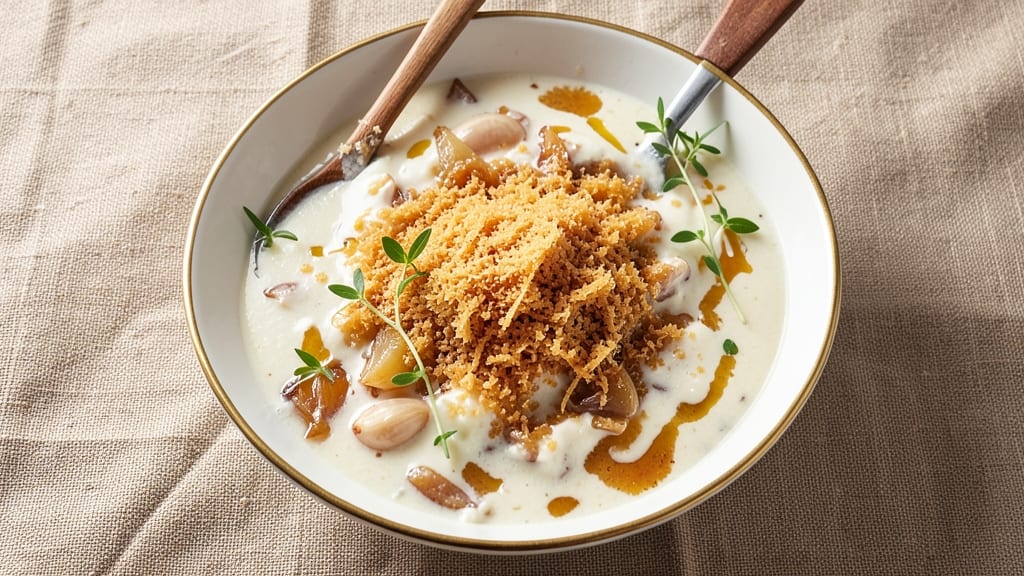
This Asiago cheese soup recipe transforms humble ingredients into a velvety, nutty masterpiece that balances rich umami with crispy breadcrumb contrast. The secret lies in slow-melting aged Asiago—its sharp, caramelized notes develop as it simmers, while toasted breadcrumbs add irresistible texture. I perfected this version after years of testing, ensuring every spoonful delivers that perfect harmony of creaminess and crunch.
What sets this recipe apart is the two-stage cheese technique: first melting a small amount to create an emulsifying base, then gradually whisking in the rest to prevent separation. The result is a soup with restaurant-quality depth that stays smooth even after reheating.
For extra richness, I brown the cheese first—this step unlocks its full nutty complexity, taking it from good to extraordinary.
By the time you stir in those toasted breadcrumbs, you'll have a bowl that's visually stunning and packed with flavor layers: the creamy Asiago base, the crispy topping, and optional additions like crispy bacon or sautéed mushrooms for heartier versions.
The aroma alone will have everyone gathering around the pot, and the first bite proves why this becomes a winter staple.
This recipe scales beautifully—double it for parties or halve it for leftovers—and the technique works with both cream-based and broth-based versions. The key is patience in the cheese melting; rushing leads to lumps. Let's create this comforting classic that tastes like a hug in a bowl.
Ingredients for asiago cheese soup
The secret to velvety Asiago soup lies in aged cheese, slow melting, and crispy breadcrumb contrast.
| Ingredient | Amount | Notes |
|---|---|---|
| Aged Asiago Cheese 🧀 | 1 ½ cups | Freshly grated, extra-aged for depth |
| Heavy Cream 🥛 | 1 cup | Full-fat for optimal richness |
| Whole Milk 🥛 | 1 ½ cups | Warmed for smooth emulsification |
| Chicken Broth 💧 | 4 cups | Homemade or high-quality store-bought |
| Shallots 🧅 | 2 whole | Finely minced for subtle sweetness |
| Garlic Cloves 🧄 | 4 cloves | Peeled and minced for aromatic depth |
| Extra-Virgin Olive Oil 🫒 | 2 tbsp | For sautéing aromatics |
| All-Purpose Flour 🌾 | 2 tbsp | For thickening the base |
| Parmesan Cheese 🧀 | ½ cup | Freshly grated for umami boost |
| Fresh Thyme Leaves 🌿 | ¼ cup | Chopped for herbal brightness |
| Salt 🧂 | 1 ½ tsp | Diamond Crystal preferred |
| Black Pepper 🌶️ | ½ tsp | Freshly ground for heat |
| Panko Breadcrumbs 🍞 | ½ cup | Toasted until golden |
| Unsalted Butter 🧈 | 2 tbsp | Melted for topping |
| Nutmeg 🌿 | ¼ tsp | Freshly grated for warmth |
The Asiago cheese is non-negotiable—aged 12+ months delivers that signature nutty depth. Whole Foods and specialty cheese shops carry the best, but look for blocks labeled 'extra-aged' or 'stravecchio' at gourmet markets. Freshly grating it yourself makes all the difference; pre-shredded lacks the melt and texture. For the broth, homemade chicken stock elevates the soup, but Pacific Foods or Kitchen Basics brands are reliable shortcuts. The shallots should be vibrant purple-red, not dried out—buy them fresh and mince them yourself for the best flavor.
No aged Asiago? Parmigiano-Reggiano works in a pinch, but expect less complexity. Fresh thyme unavailable? Dried thyme at one-third the amount suffices, though fresh is ideal. The Panko breadcrumbs can be swapped for toasted breadcrumbs from a baguette, but Panko stays crispier. For extra richness, add a splash of white wine when sautéing the aromatics—it cuts through the cheese's intensity beautifully. The nutmeg is key; if you only have whole nutmeg, grate it fresh for maximum aroma.
This soup reheats beautifully—gentle warming on low heat prevents curdling. Store leftovers in an airtight container for up to 4 days; the flavor actually improves overnight as the cheese continues to meld. For freezing, portion into single-serving containers and thaw in the fridge—microwaving straight from frozen can make the breadcrumbs soggy. The toasted breadcrumb topping is best added fresh, but you can toast extra and sprinkle it on top before serving.
Why You'll Love This Recipe
- No-Shallot Struggle: I swear by this recipe because chopping shallots is not a prerequisite—you can swap them for a splash of garlic powder or even skip them entirely. The rich Asiago and heavy cream carry the flavor just fine, and honestly? I’ve made it three times with whatever I had in the pantry.
- Umami Bomb: That aged Asiago isn’t just cheese—it’s a deep, nutty punch that lingers. The slow melt into the chicken broth turns this into something heartier than your average tomato soup, and the heavy cream ties it all together like a warm hug. (Yes, even on a Tuesday night.)
- Lunchbox Hero: Between us, this soup is my go-to for meal prep. It reheats beautifully, keeps for days in the fridge, and I’ve even packed it in thermoses for work—no one’s ever complained. The texture stays creamy, not grainy, and the shallots (if you use them) add a subtle sweetness that kids actually eat.
- Pantry Goldmine: Here’s what sold me—this recipe doesn’t demand fancy ingredients. You’re probably already stocking aged Asiago, chicken broth, and heavy cream, and the milk? Basic. I’ve made it for under $5 a serving, and the leftovers? Even better the next day. It’s the kind of soup that makes you wonder why you ever bought takeout.
Step-by-step instructions for Asiago cheese soup
Aged asiago delivers nutty richness while toasted breadcrumbs add irresistible texture. Here's how to balance depth and crunch perfectly.
Sauté Aromatics Until Fragrant
Heat the 2 tablespoons extra-virgin olive oil in a heavy-bottomed pot over medium heat. Add the 2 whole shallots and 4 cloves garlic, cooking for 5-6 minutes until the shallots soften and become translucent. You'll notice the kitchen fill with their sweet, pungent aroma—a crucial foundation for the soup's flavor.
This low-and-slow sauté prevents burning while developing the aromatics' full potential. If the shallots start to brown too quickly, reduce heat to medium-low. The garlic should cook until just fragrant, not colored—overcooking turns it bitter. Keep the pan uncovered to allow moisture to evaporate completely.
Build the Base with Flour and Broth
Sprinkle the 2 tablespoons all-purpose flour over the cooked shallots and garlic, stirring vigorously for 1-2 minutes until the mixture turns a pale golden color. This creates a roux that will thicken the soup beautifully. Immediately pour in the 4 cups chicken broth, whisking constantly to prevent lumps from forming.
Bring the mixture to a gentle simmer over medium-high heat, then reduce to medium-low and let it cook uncovered for 10 minutes. You want the broth to reduce slightly, intensifying its flavor. The soup should thicken noticeably but remain silky—if it becomes too thick, whisk in 1-2 tablespoons of warm water to adjust the consistency.
Infuse with Dairy and Seasonings
Gently stir in the 1.5 cups whole milk and 1 cup heavy cream, heating the mixture over low heat until steaming but not boiling. Add the 1.5 cups aged asiago cheese and 0.5 cup parmesan cheese, stirring constantly until fully melted and smooth. The cheese should dissolve completely, creating a velvety texture.
Season with the 1.5 teaspoons salt, 0.5 teaspoon black pepper, and 0.25 teaspoon nutmeg, then add the 0.25 cup chopped fresh thyme leaves. Simmer gently for 5-7 minutes to allow the flavors to meld. The soup should taste rich and well-seasoned—adjust salt if needed, as aged asiago is already quite salty.
Toast Breadcrumbs for Topping
While the soup simmers, heat a dry skillet over medium heat and toast the 0.5 cup panko breadcrumbs for 2-3 minutes, stirring constantly, until they turn a deep golden brown and smell nutty. Remove from heat immediately to prevent burning, then melt the 2 tablespoons unsalted butter in a small saucepan over low heat and stir in the toasted breadcrumbs until evenly coated.
This crispy topping is the secret to this soup's irresistible texture contrast. The breadcrumbs should be dry and crunchy, not moist or clumpy. If they lose their crunch, toast them again briefly before serving. Keep the buttered breadcrumbs warm until ready to use.
Finish and Serve with Crunch
Ladle the soup into warmed bowls, then top each serving generously with the buttered panko breadcrumbs. The contrast between the creamy, nutty soup and the crispy topping is what makes this dish truly special. Serve immediately while the breadcrumbs are at their peak crunch—waiting even a few minutes will make them soften noticeably.
For an extra touch of elegance, garnish with a sprinkle of freshly cracked black pepper. The soup should be rich but not overly heavy, with the asiago's nutty depth balanced by the herbal brightness of the thyme. Each spoonful delivers a perfect harmony of textures and flavors that define this sophisticated yet approachable dish.
Pro Tips For Making Asiago Cheese Soup
- MELT CHEESE SLOWLY: Aged Asiago is stubborn—don’t dump it in hot liquid or you’ll end up with grainy lumps. Warm the broth to a gentle simmer first, then whisk in the cheese a handful at a time while stirring like your life depends on it. (Yes, even if you’re impatient like me.)
- SAUTÉ SHALLOTS UNTIL GOLDEN: I used to rush this step, and the soup always tasted flat. Cook the shallots in butter over medium heat until they’re deep golden, not just soft—about 8-10 minutes. The caramelized flavor is what makes this soup sing.
- BALANCE CREAM WITH BROTH: Heavy cream alone makes this soup rich to the point of heaviness. For every cup of cream, use at least 1.5 cups of warm broth—it keeps the texture silky without drowning the cheese flavor. (Your future self will thank you.)
- STRAIN THE BROTH FIRST: Skip the cloudy broth, even if it means an extra 5 minutes. Straining out any sediment gives you a cleaner base, and the soup will look (and taste) more refined. Use a fine-mesh sieve—it’s worth the effort.
Pro cooking tips for asiago cheese soup
Cheese Melting Mastery
The key to velvety Asiago soup lies in the two-stage cheese technique. First, melt just ¼ cup of the aged Asiago with the warm milk and cream to create an emulsifying base.
This prevents curdling when you add the remaining 1.25 cups. Stir constantly over low heat—never boil—to maintain smoothness. I use a whisk with a heat-resistant handle for this step. 🔥
Temperature Control
Never let your soup boil after adding cheese—even gentle simmering can cause separation. Maintain a temperature between 160°F and 180°F using a candy thermometer for precision. If you don't have one, watch for tiny bubbles breaking the surface (not rolling boil).
For extra insurance, whisk vigorously for 1-2 minutes after adding cheese to ensure complete integration.
Broth Reduction
Reduce the broth by 20-25% before adding dairy—this intensifies flavor without thickening. Simmer uncovered over medium-low heat for 10 minutes, stirring occasionally. The aroma will deepen as moisture evaporates, creating a more concentrated base. I like to taste the broth before adding milk to adjust seasoning—this prevents over-salting later.
Breadcrumb Crispiness
Toast breadcrumbs in a dry skillet over medium heat until they're golden brown and smell nutty—this takes exactly 2-3 minutes. The moment they darken, remove them immediately to prevent burning.
For extra crunch, mix with melted butter right before serving. I keep a separate small skillet just for toasting breadcrumbs to avoid flavor transfer from other foods. ✨
Equipment Essentials
Use a heavy-bottomed pot (like All-Clad) to prevent scorching during sautéing. A fine-mesh strainer helps remove any stray thyme stems, and a whisk with a long handle ensures smooth cheese integration. For serving, pre-warm bowls in a 200°F oven for 5 minutes to maintain temperature contrast with the hot soup.
Flavor Balancing
Taste the soup at each stage—especially after adding cheese. The aged Asiago is already salty, so you may need less than the 1.5 tsp salt called for. The nutmeg should be subtle; use ¼ tsp as a starting point.
Fresh thyme adds brightness, but dried thyme (at ⅓ the amount) works in a pinch. Adjust creaminess by adding warm milk 1 tbsp at a time if needed.
Nutrition facts
Frequently asked questions
Can I make this Asiago cheese soup without heavy cream?
Replace the 1 cup heavy cream with 1 cup whole milk for a lighter version, or use ½ cup cream and ½ cup milk for a balance. For extra richness without cream, stir in 2 tablespoons melted butter at the end. The soup will still be velvety, though slightly less decadent.
How do I prevent the cheese from separating?
Use the two-stage cheese technique: First, melt ¼ cup Asiago with the warm milk to create an emulsifier. Then gradually whisk in the remaining cheese while keeping heat at low. Never let the soup boil after adding cheese—simmer gently at 160°F-180°F. If it separates, whisk in 1 tablespoon warm water to help re-emulsify.
What's the best way to reheat leftovers?
Reheat gently on the stovetop over low heat, stirring frequently to prevent scorching. Avoid microwaving—it can make the breadcrumbs soggy. For extra insurance, whisk in 1 tablespoon warm milk while reheating to restore creaminess. Leftovers keep well in an airtight container for 4 days in the fridge.
Can I add other cheeses to this recipe?
Yes! For extra depth, add ½ cup Gruyère or ½ cup sharp cheddar along with the Asiago. Both melt beautifully and add complementary flavors. Avoid cheeses like blue cheese or feta—they can curdle when heated. For a vegetarian version, swap the chicken broth for mushroom or vegetable broth.
Why does my soup taste too salty?
Aged Asiago is naturally salty, so taste before adding the full 1.5 tsp salt. Start with just ½ tsp and adjust. If it's still too salty, stir in 1-2 tablespoons warm milk or broth to dilute. For future batches, reduce the salt by ⅓ if using extra-aged Asiago.