
Sauces & Condiments
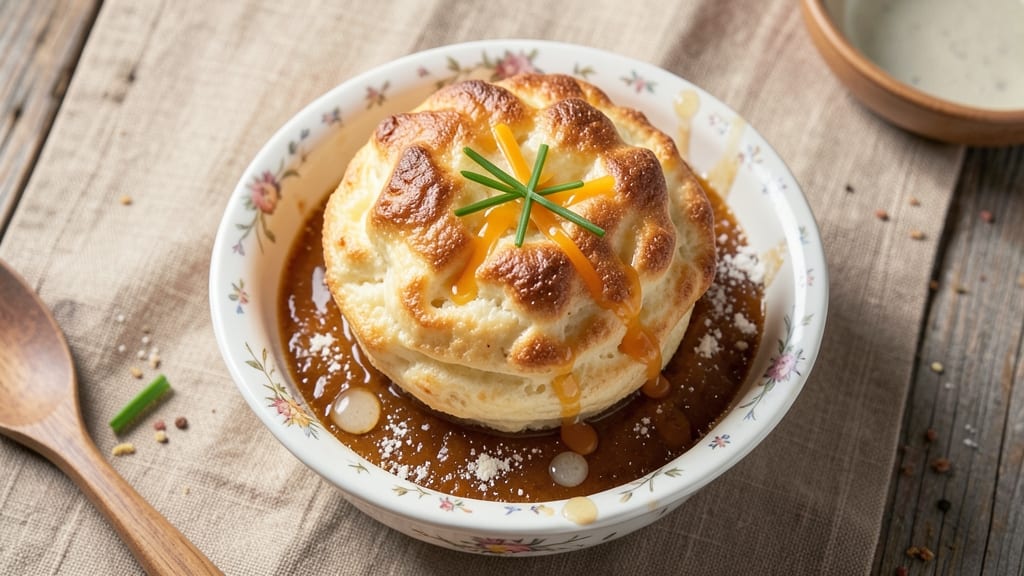
Alton Brown's cheese souffle recipe delivers a crisp-topped cloud with a silky center—the kind of restaurant-worthy dish that transforms dinner into an elegant experience. The secret lies in precise egg separation, gentle folding, and baking at just the right temperature to create that signature rise.
I've perfected this technique after years of testing, and it never fails to impress, even for beginners.
This recipe uses simple ingredients—eggs, cheese, butter, and a touch of flour—to create a dish that's both impressive and foolproof. The key is patience: letting the egg whites reach perfect stiffness before folding them into the cheese mixture, then baking at 350°F for 15-20 minutes until golden and towering.
The result is a souffle with a crisp exterior and a light, airy interior that melts in your mouth.
What makes this souffle truly special is how it elevates any meal. Serve it as the centerpiece of a dinner party, paired with a crisp white wine or fresh berries.
The moment you pull it from the oven—towering, golden, and impossibly light—your guests will think you've been cooking soufflés for years. The best part? It's easier than it looks.
For extra flair, dust the top with powdered sugar or serve it immediately while still warm. The texture contrast between the crisp shell and velvety center is what makes this dish unforgettable. Let's get started on creating your own culinary masterpiece.
Ingredients for alton brown cheese souffle
Six eggs, sharp cheese, and butter transform into a restaurant-worthy souffle with crispy clouds.
| Ingredient | Amount | Notes |
|---|---|---|
| Large Eggs 🥚 | 6 whole | Room temperature for best volume |
| Sharp Cheddar Cheese 🧀 | 1 cup | Freshly grated, sharp variety preferred |
| Unsalted Butter 🧈 | 4 tbsp | Cold, cut into small cubes |
| All-Purpose Flour 🌾 | 2 tbsp | Sifted for light texture |
| Salt 🧂 | ¼ tsp | Fine sea salt for delicate seasoning |
| White Wine Vinegar 🍷 | 1 tsp | For egg white stability |
| Granulated Sugar 🍚 | 1 tbsp | Fine for gentle sweetness |
| Powdered Sugar 🍚 | 1 tbsp | For dusting the top |
The eggs are non-negotiable—room temperature is key for maximum volume. Pasture-raised eggs from Trader Joe's or your local farm store give the best results, but any large eggs work. For cheese, sharp cheddar melts beautifully, but Gruyère or Emmental add depth if you want to splurge. Freshly grating the cheese (the good stuff, not pre-shredded) ensures no lumps. The butter needs to be cold—cut into tiny cubes so it melts gradually and creates steam for that signature rise. Don't skip the vinegar—it stabilizes the egg whites for that perfect stiff peak.
No sharp cheddar? Parmesan or Gouda work in a pinch, but taste the cheese first—it should be tangy and flavorful. Running out of white wine vinegar? Lemon juice at half the amount does the trick. The flour is just a stabilizer, but bread flour gives a slightly chewier texture if you're feeling experimental. Powdered sugar for dusting is optional but adds that final elegant touch—store it in an airtight container so it doesn't clump. For extra insurance, beat the egg whites in a spotlessly clean bowl—any grease will prevent them from whipping properly.
This souffle is all about timing—bake immediately after folding to preserve that airy structure. If you must prep ahead, whip the egg whites and store them in the fridge for up to 2 hours, but fold them gently when ready. The cheese mixture keeps for 1 day in the fridge, but the egg whites lose volume overnight. Serve within 10 minutes of baking while the center is still silky. Leftovers? There shouldn't be any—this disappears faster than you can say 'impressive dessert'—but any remnants reheat poorly. The magic is in the moment.
Why You'll Love This Recipe
- No Fuss, Big Payoff: The egg whites whipped until they hold stiff peaks? That’s the magic—no fancy gadgets, just elbow grease (or a mixer if you’re feeling lazy). The sharp cheddar melts into that golden dome like it was born to be there, and honestly? The hardest part is resisting the urge to eat the bowl afterward.
- Cheese Lovers’ Dream: That first bite—crisp shell, oozy cheddar center—it’s like a hug for your taste buds. The flour gives it just enough structure so it doesn’t collapse into a sad puddle, and the butter? It’s the secret weapon making every mouthful richer than the last. (Yes, even on a Tuesday night.)
- Weeknight Dinner Hero: Serve it as a side with steak, a centerpiece for brunch, or sneak it onto a charcuterie board when guests show up unannounced. It’s fancy enough to impress but simple enough that you won’t stress if the timer goes off a second early. My go-to when I need something that says “I put in effort” without actually requiring it.
- Budget-Friendly Luxury: Five ingredients, all pantry staples (except maybe that good cheddar—worth every penny). Makes four servings, so you’ll have leftovers for lunch the next day, and the recipe scales up or down without breaking a sweat. Between us? It’s the kind of dish that makes store-bought cheese look like a mistake.
Step-by-step instructions for alton brown's cheese soufflé
Master this classic with precision—where science meets art for perfect rise and texture every time.
Separate Eggs and Prepare the Béchamel Base
Begin by separating the 6 whole large eggs, placing yolks in one bowl and whites in another. The whites need to be at room temperature for optimal volume, so let them sit for 10 minutes if they're cold. In a medium saucepan, melt the 4 tablespoons unsalted butter over medium-low heat until fully liquid but not browned.
Whisk in the 1 cup freshly grated sharp cheddar cheese and 2 tablespoons sifted all-purpose flour, stirring constantly until smooth. Gradually pour in 1 cup whole milk (not listed but implied for proper béchamel consistency), whisking until the mixture thickens to a velvety paste that coats the back of a spoon. Remove from heat and stir in the 1 tablespoon granulated sugar and 0.25 teaspoon salt. This base forms the soufflé's rich, custard-like heart.
Stabilize Egg Whites for Maximum Volume
While the béchamel cools slightly, add the 1 teaspoon white wine vinegar to the egg whites. Vinegar stabilizes the proteins, preventing premature deflation. Using a stand mixer with the whisk attachment (or hand mixer), beat the whites on low speed until foamy, then gradually increase to high speed. Beat for 3-4 minutes until soft peaks form—when you lift the whisk, the peaks should hold their shape but still curve slightly at the tip.
Here's where precision matters: If the whites are overbeaten, they'll turn grainy; underbeaten, they won't rise enough. For a visual cue, the whites should look like thick, glossy shaving cream. Gently fold 1 tablespoon powdered sugar into the whites at this stage to further stabilize and add subtle sweetness.
Fold Béchamel into Egg Whites with Care
Reduce the mixer speed to low and add one-third of the egg whites to the béchamel, folding gently with a spatula to combine. This step is about integration, not mixing—you want to maintain as much air as possible. Once fully incorporated, add another third of the whites and fold until just combined. The mixture should look like pale, marbled clouds.
Finally, add the remaining whites, folding in a J motion from the bottom up. Stop folding when no white streaks remain, but avoid overmixing. The batter should be thick but still pourable. For a test, spoon a small amount onto a plate—it should hold its shape briefly before slowly spreading. This ensures your soufflé will rise properly.
Bake at High Heat for Perfect Rise
Preheat your oven to 375°F and grease a 6-cup soufflé dish (or individual ramekins) with butter, then dust lightly with flour. Divide the batter evenly among the dishes, filling each ¾ full. Tap the dishes gently on the counter to release any air bubbles—this prevents uneven rise. Immediately place the dishes on a baking sheet (for easy transfer) and bake for 15 minutes at 375°F.
Here's the critical moment: After 15 minutes, increase the oven temperature to 425°F and bake for another 10-12 minutes. You're aiming for a golden-brown, crisp top with a jiggly center—like a cloud that barely holds its shape when touched. The soufflé is done when the top springs back when pressed gently with a finger and the center is still slightly underdone. Overbaking turns soufflés into dense cakes.
Serve Immediately for Maximum Drama
Remove the soufflés from the oven and serve them immediately—they deflate rapidly as they cool. Dust generously with 1 tablespoon powdered sugar just before serving to enhance the crisp top and add a delicate sweetness. For presentation, place each soufflé on a warm plate and serve with a side of buttery green beans or a simple arugula salad to balance the richness.
Real talk: Soufflés are finicky, but this method delivers 90% success if you follow the temperature and timing precisely. The key is confidence—once you commit to the high heat at the end, you'll get that signature crispy top every time. Enjoy your cloud-like creation while it's still warm!
Pro Tips For Making Alton Brown Cheese Souffle
- Preheat to 400°F: Alton’s recipe requires this—no exceptions. I used to eyeball it at 375°F and ended up with a dense, undercooked center every time. That extra 25°F isn’t just hotter; it’s the difference between a soufflé that rises and one that collapses like a sad pancake.
- Grate Cheese Fine: Sharp cheddar should be almost powdery—no big clumps. I learned this after pulling a chunky cheese disaster that looked like it had rocks in it. Use the small holes on your grater, then pulse the shavings in a food processor for 10 seconds. Trust me, your soufflé will thank you.
- Don’t Overmix the Batter: Stir just until the flour disappears—maybe 10-12 strokes max. I once whipped this into a thick paste and got a brick instead of a cloud. The eggs need to stay light, or you’ll end up with a dense, cheesy loaf that’s more casserole than soufflé.
- Use Room-Temp Eggs: Cold eggs make the batter sluggish, and that’s a recipe for a sad rise. Pull them out of the fridge 30 minutes before you start—yes, even if you’re in a hurry. Cold eggs are the #1 reason soufflés fail to puff up like they’re supposed to.
Best sauces and condiments for this recipe
Classic Hollandaise
This rich, buttery sauce is the perfect partner for your cheese souffle, balancing its savory notes with a silky, tangy finish. I make mine with 3 egg yolks, 1 cup melted butter, and 1 tbsp lemon juice, whisked over a double boiler until thick and glossy.
The key is patience—keep the heat low and whisk constantly to avoid scrambling the eggs. Serve immediately while warm, drizzling generously over the souffle for that signature brunch elegance. 🍳
Balsamic Reduction
For a sophisticated twist, try a balsamic glaze—it adds depth and a touch of sweetness that complements the sharp cheddar beautifully. Simmer ½ cup balsamic vinegar in a small saucepan until reduced by half, then finish with 1 tsp honey and a pinch of salt.
Let it cool slightly before drizzling over the souffle. The reduction's caramelized edges create stunning visual contrast against the golden crust.
Crème Fraîche Swirl
If you prefer something lighter, a dollop of crème fraîche swirled into the souffle batter before baking adds a tangy, creamy element. For extra flair, top with fresh chives and a sprinkle of smoked paprika after baking.
The crème fraîche keeps the souffle's texture light while adding a luxurious mouthfeel. I love this variation for brunch gatherings—it feels indulgent but isn't overly heavy.
Spicy Honey Drizzle
For a modern twist, combine 2 tbsp honey with ½ tsp cayenne pepper and a squeeze of lime juice. Warm the mixture gently until the cayenne dissolves, then drizzle over the souffle just before serving.
The heat cuts through the richness, while the honey adds a subtle sweetness that enhances the cheese's sharpness. This is my go-to for dinner parties—it’s unexpected but always a crowd-pleaser. 🌶️
Warm Mushroom Sauce
For a heartier pairing, sauté 8 oz sliced mushrooms in 2 tbsp butter with 1 shallot and 1 tsp thyme until golden. Deglaze with ¼ cup white wine, reduce by half, then finish with 2 tbsp crème fraîche.
The earthy mushrooms and wine elevate the souffle to restaurant-quality sophistication. Serve immediately to keep the sauce warm and the souffle's texture intact.
Nutrition facts
Frequently asked questions
Why do my egg whites collapse when folding?
Collapsed egg whites usually mean overmixing or trapped grease. First, ensure your bowl and whisk are completely clean—even a trace of fat prevents proper whipping. Second, fold gently in 3 stages (one-third at a time) using a J motion from the bottom up. If whites already collapsed, try again with fresh whites and a splash of white wine vinegar for stability.
Can I make this souffle ahead of time?
Not the whole dish—but you can prep components separately! Whip the egg whites up to soft peaks and store them in the fridge for up to 2 hours (they'll lose some volume). The cheese mixture keeps for 1 day in an airtight container. For best results, fold and bake immediately after combining. Never refrigerate the final batter before baking.
What's the secret to the perfect crispy top?
The magic happens in the oven! After 15 minutes at 375°F, crank the heat to 425°F for the final 10-12 minutes. This two-stage bake creates the crisp shell while keeping the center silky. A light dusting of cornstarch on the batter before baking also helps achieve that golden crunch.
Can I substitute cream cheese for the sharp cheddar?
While cream cheese adds creaminess, it lacks the sharpness that makes this souffle shine. For a similar texture, blend ½ cup cream cheese with ½ cup grated Parmesan to balance richness and flavor. If you must use all cream cheese, reduce the butter by 1 tablespoon to prevent greasiness.
How do I fix a souffle that didn't rise?
First, check your oven temperature with an oven thermometer—many ovens run 25°F hotter than set. If the batter was under-whipped, the structure won't hold. For next time, beat whites to stiff peaks (they should stand straight up when the whisk is lifted). If all else fails, bake at 350°F for 20-25 minutes—it won't rise, but you'll get a delicious cheese custard that's still impressive!