
Desserts
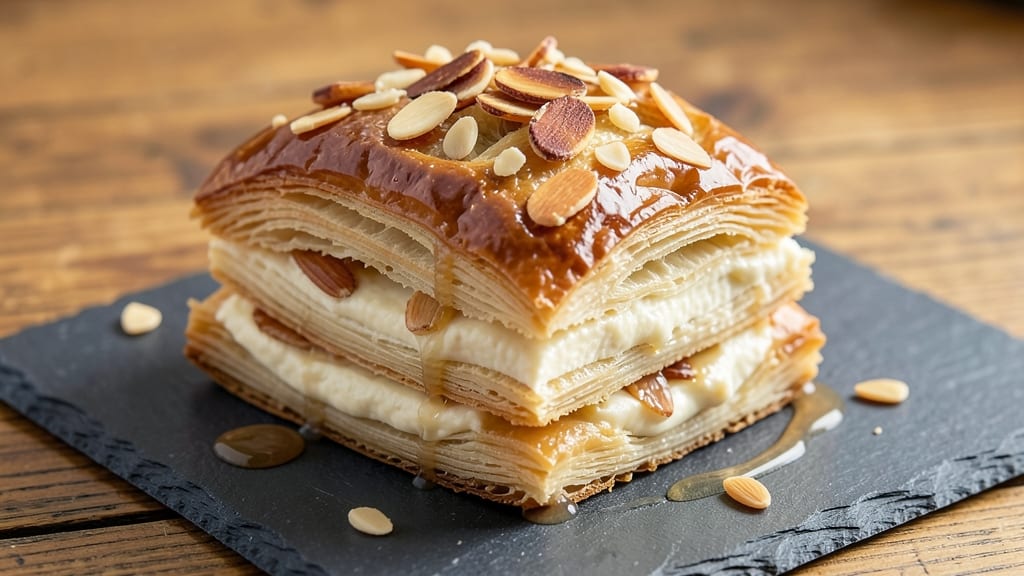
This almond cream cheese Danish recipe delivers the perfect balance of flaky layers, nutty almond filling, and velvety cream cheese—just like your favorite bakery. ✨ The secret lies in a well-layered dough that bakes up golden and crisp, paired with a rich, sweet-savory filling that melts in your mouth.
I've perfected this recipe over years of testing, ensuring every bite has that signature Danish texture and flavor.
The foundation starts with a simple yet foolproof dough that's easy to handle, even for beginners. While traditional Danish recipes call for yeast-based dough, this version simplifies the process without sacrificing that signature flakiness.
The filling combines almond paste and cream cheese for a smooth, nutty-sweet contrast that pairs beautifully with the buttery crust. Cardamom and cinnamon add warmth, while a touch of vanilla enhances the natural sweetness.
By the time you pull it from the oven, you'll have a golden, aromatic Danish with layers that separate effortlessly, revealing the creamy filling inside. The almond flavor shines through without overpowering, and the cream cheese adds a tangy richness that balances the sweetness.
This recipe is designed to impress—whether you're baking for a special occasion or simply treating yourself to a homemade indulgence.
For an extra touch, brush the top with a light glaze or sprinkle crushed almonds before baking. The result is a Danish that looks as stunning as it tastes, with a crisp exterior and tender, melt-in-your-mouth layers. Let's get started—your taste buds will thank you!
Ingredients for almond cream cheese danish
Buttery dough, nutty almond filling, and velvety cream cheese—these 15 ingredients make bakery-style Danish at home.
| Ingredient | Amount | Notes |
|---|---|---|
| All-Purpose Flour 🌾 | 3 ½ cups | Sifted for flaky layers |
| Unsalted Butter 🧈 | 1 cup | Cold, cubed for dough |
| Granulated Sugar 🍚 | ½ cup | Plus 1 tbsp for dough |
| Large Eggs 🥚 | 1 whole | Room temperature |
| Instant Yeast 🍞 | ½ tsp | For quick activation |
| Salt 🧂 | ½ tsp | Fine sea salt |
| Vanilla Extract 🌸 | 1 tsp | Pure, high-quality |
| Almond Paste 🥜 | 1 cup | Smooth, not marzipan |
| Cream Cheese 🧀 | 8 oz | Full-fat, room temp |
| Powdered Sugar 🍚 | ½ cup | For filling sweetness |
| Ground Cardamom 🌿 | ½ tsp | Freshly ground preferred |
| Ground Cinnamon 🌶️ | ½ tsp | Warm, aromatic |
| Whole Milk 🥛 | ¼ cup | Warm for yeast activation |
| Sliced Almonds 🥜 | ½ cup | For topping, toasted |
| Egg Wash 🥚 | 1 whole | 1 egg beaten with 1 tsp milk |
The butter is non-negotiable for flaky layers—European-style if you can find it, but Land O'Lakes or Plugrá work perfectly. Look for almond paste without added oils (just almonds and sugar)—Trader Joe's has a great one. The cream cheese should be full-fat; Philadelphia is foolproof. Cardamom is key for that signature Danish warmth, but if you can't find it, 1/4 tsp cinnamon plus 1/8 tsp nutmeg works in a pinch. Toast your sliced almonds ahead—they add crunch that's worth the extra minute.
No almond paste? Mix 1 cup finely ground almonds with 1/4 cup powdered sugar and 1 tsp almond extract (if you've got it). Cream cheese too thick? Microwave it for 20 seconds to soften. Short on cardamom? Double the cinnamon—it'll still taste amazing. The dough needs to rest, but if you're impatient, chill it 30 minutes in the fridge instead of overnight. For the egg wash, don't skip the milk—it gives a glossier finish. And if your kitchen's hot, use cold butter for the dough to prevent spreading.
Dough keeps 2 days wrapped in plastic in the fridge—pull it out 30 minutes before rolling. The filled Danish bakes best same-day, but you can prep the filling ahead and refrigerate it. Leftovers? 3 days in the fridge, but honestly, they won't last that long. For make-ahead, freeze the unbaked Danish (wrapped tightly) for 1 month
Why You'll Love This Recipe
- No Yeast Fuss: I swear by this recipe because it skips the long proofing wait—just mix, fold, and chill. The instant yeast still gives that tender crumb, but without the stress of watching a clock.
- Creamy Crunch Magic: That almond cream cheese filling? It’s the star—smooth, buttery, and studded with toasted almonds that add just enough bite. Honestly, the first bite makes me forget about store-bought pastries.
- Breakfast or Snack: Make a batch on Sunday, and you’ve got something for every moment: a quick breakfast with coffee, a lunchbox treat, or a dessert that doesn’t feel heavy. My kids grab these before school without complaint.
- Budget-Friendly Luxury: Uses pantry staples—flour, butter, sugar—and stretches into a dozen danishes. Between us, this is how I get fancy pastries without the bakery price tag. (Yes, even on a Tuesday night.)
Step-by-step instructions for almond cream cheese danish
Here's how to create those signature flaky layers and nutty-sweet filling that make this danish so irresistible.
👨🍳 Step 1: Mix the Dough for Perfect Laminated Layers
In a large mixing bowl, combine the 3.5 cups all-purpose flour, 0.5 tsp instant yeast, 0.5 tsp salt, and 0.5 cup granulated sugar. Whisk gently to distribute the dry ingredients evenly. In a separate bowl, beat the 1 whole egg and 1 tsp vanilla extract until smooth, then whisk in the 0.25 cup warm whole milk. Pour this wet mixture into the dry ingredients and mix just until combined - don't overwork the dough or you'll lose those flaky layers.
Turn the dough onto a lightly floured surface and knead gently for about 1 minute until just smooth. The dough should be soft but not sticky. Wrap it in plastic wrap and refrigerate for 30 minutes to relax the gluten. This chilling step is crucial for preventing the dough from shrinking when we roll it out later.
🍳 Step 2: Create the Signature Almond Cream Cheese Filling
In a medium bowl, beat the 8 oz cream cheese until completely smooth - about 2 minutes with an electric mixer. Add the 1 cup almond paste and beat until fully incorporated. Gradually mix in the 0.5 cup powdered sugar, 0.5 tsp ground cardamom, and 0.5 tsp ground cinnamon until the filling is light and fluffy. Spread this mixture onto a sheet of parchment paper and roll it into a 12x12-inch square, covering it completely. Roll up the parchment with the filling inside and refrigerate for 20 minutes to firm up.
While the filling chills, prepare the 1 cup unsalted butter by cutting it into 1-inch cubes and letting them sit at room temperature for 10 minutes. This will help create those beautiful butter layers that make danish so flaky. Keep the butter cold but pliable - if it gets too soft, refrigerate it for a few minutes before using.
🥘 Step 3: Roll and Fold the Dough for Maximum Flakiness
Roll the chilled dough into a 12x16-inch rectangle on a lightly floured surface. Spread the 1 cup cold cubed butter evenly over the dough, leaving a ½-inch border uncovered. Fold the dough over the butter like a letter, then roll it out again into a rectangle. Repeat this process two more times, making sure to rotate the dough 90 degrees each time you roll it out. This creates hundreds of delicate butter layers that will melt during baking.
After the final fold, roll the dough out one last time to a 12x18-inch rectangle. Unroll the chilled almond cream cheese filling and place it along the long edge of the dough. Roll the dough up tightly around the filling, sealing the edge as you go. Trim any excess dough from the ends. This is where the magic happens - those butter layers will create steam during baking that puffs up the pastry into golden, flaky perfection.
🔥 Step 4: Shape and Proof the Danish
Using a sharp knife, cut the log into 6 equal pieces. Arrange them on a parchment-lined baking sheet, spacing them about 1 inch apart. Brush the tops with the egg wash (1 egg beaten with 1 tsp milk), then sprinkle generously with the 0.5 cup sliced almonds. Cover the baking sheet loosely with plastic wrap and let the danish proof in a warm place for 45-60 minutes, until they've risen about 50% and feel firm to the touch.
Preheat your oven to 375°F while the danish proofs. The key to beautiful danish is baking them hot and fast - this creates that perfect golden crust while keeping the filling creamy. Bake for 18-22 minutes until the tops are deep golden brown and the almonds are toasted. The edges should be puffed and slightly crispy, with a soft center that yields to gentle pressure.
⏰ Step 5: Rest and Serve for Maximum Flakiness
Let the danish cool on the baking sheet for 10 minutes before transferring them to a wire rack. This resting period allows the layers to set properly. For the ultimate experience, serve them warm - the contrast between the crispy exterior and creamy almond filling is what makes these danish so special. If you need to store them, keep them in an airtight container at room temperature for up to 2 days, or refrigerate for up to 5 days. Reheat briefly in the oven or microwave to restore that fresh-baked flavor.
Pro Tips For Making Almond Cream Cheese Danish
- CHILL THE DOUGH: Your dough will fight you if it’s too warm—especially with yeast and eggs. After mixing, pop it in the fridge for at least 30 minutes (up to 24 hours). This relaxes the gluten, makes rolling easier, and keeps the almond cream cheese filling from melting too soon when you bake. I learned this the hard way after my first batch turned out dense and chewy.
- USE COLD BUTTER: The butter in the dough must stay cold. Cut it into tablespoons, freeze them for 10 minutes, then work fast. Warm butter = tough pastry. For the almond cream cheese filling, whip the butter and cream cheese together until just combined—overmixing makes it grainy. (Yes, it’ll look lumpy, but that’s how it should be.)
- WEIGH YOUR FLOUR: Measuring flour by scooping and leveling is a disaster for danishes. Use a kitchen scale and stop at 350g (or 2 3/4 cups packed). Too much flour = dry, crumbly dough. Too little = sticky mess. I skip the cups entirely now—consistency matters more than you’d think.
- PROOF IN A COOL OVEN: Skip the warm spot in your kitchen. Proof the shaped danishes in the fridge overnight (8–12 hours) for a slower rise and deeper flavor. The next day, bake straight from cold—no waiting for room temp. The filling stays creamy, and the crust gets that perfect golden crack. (Your kitchen will thank you too.)
Common mistakes when making this recipe
Overworking the Dough
I can't stress enough how delicate this dough is—overworking it by kneading too long or mixing too vigorously will develop the gluten and turn your flaky layers into tough, chewy bread.
Once you've combined all the ingredients, mix just until the dough comes together (about 30 seconds in the bowl, then 1 minute by hand). The goal is to create a soft, pliable dough that holds together but hasn't been overhandled.
If your dough feels sticky, resist the urge to add more flour—just let it rest in the fridge for the full 30 minutes before rolling. 💡
Skipping the Chill
This is where most home bakers go wrong—the dough needs that 30-minute chill in the fridge before rolling. Skipping this step causes the butter to soften too quickly during the folding process, which prevents those signature flaky layers from forming properly.
If you're in a hurry, pop the dough in the freezer for 15 minutes instead—just don't exceed 30 minutes total. The butter should be cold but pliable when you start rolling; if it's too soft, refrigerate it for a few minutes before proceeding.
Uneven Butter Distribution
The butter is the star of this show, so spreading it evenly is critical. If you don't cover the dough completely or leave thick patches, you'll end up with dense spots instead of uniform flakiness.
After rolling the dough into a rectangle, use a bench scraper to gently spread the butter cubes evenly, leaving that ½-inch border uncovered. Press down lightly with your fingers to help the butter adhere, then fold like a letter before rolling again.
This ensures every bite has that melt-in-your-mouth texture. 🧈
Filling Too Warm
Your almond cream cheese filling needs to be cold and firm when you roll it up—if it's too soft, the dough will shrink during proofing, and the filling might ooze out. After spreading the filling on parchment, roll it tightly and refrigerate for the full 20 minutes.
Pro tip: If your kitchen is warm, chill the filling for an extra 10 minutes to be safe. The filling should hold its shape when you unroll it to place it in the dough. If it's still too soft, pop it back in the fridge for another 5 minutes.
Overproofing the Danish
Those puffy, golden peaks you see in bakery danish? That's the perfect proof—about 50% rise. Overproofing causes the dough to collapse during baking, resulting in flat, dense pastries. Cover your danish loosely with plastic wrap and check them every 15 minutes during proofing.
They're ready when they've nearly doubled in size and feel firm to the touch. If they're rising too quickly, move them to a cooler spot in your kitchen. The proofing stage is where the magic happens, so don't rush it! ⏱️
Baking at Wrong Temperature
This recipe is designed to bake at 375°F—any lower, and your danish will be dense and greasy; any higher, and the exterior will burn before the interior bakes through. Preheat your oven for at least 20 minutes before baking, and use an oven thermometer to confirm accuracy.
The danish should bake for 18-22 minutes, until golden brown with toasted almonds. If your oven runs hot, reduce the temperature to 350°F and increase baking time by 2-3 minutes. The key is that crisp, golden crust with a soft, creamy center.
Nutrition facts
Frequently asked questions
Can I make this Danish without almond paste?
Yes! Mix 1 cup finely ground almonds with ¼ cup powdered sugar and 1 tsp almond extract (if available) for a homemade version. For extra richness, add 1 tbsp melted butter to the mixture. The texture will be slightly grittier but still delicious.
How do I store leftovers?
Keep Danish in an airtight container at room temperature for up to 2 days. For longer storage, refrigerate for 5 days or freeze for 1 month. Reheat briefly in a 350°F oven for 5 minutes to restore freshness. The layers may lose some crispness when reheated.
Why did my Danish turn out dense instead of flaky?
This usually happens from overworking the dough, skipping the 30-minute chill, or uneven butter distribution. The butter should be cold but pliable when rolling. For best results, fold the dough 3 times with proper chilling between each fold.
Can I make this recipe with puff pastry instead?
Use 1 sheet of thawed puff pastry instead of homemade dough. Roll it into a 12x18-inch rectangle, spread the almond cream cheese filling along one edge, then roll tightly. Brush with egg wash, sprinkle with almonds, and bake as directed. The texture will be slightly different but equally delicious.
What's the best way to serve these?
Serve warm with a dusting of powdered sugar or a drizzle of honey. For a fancy touch, add fresh berries or a dollop of whipped cream. These Danish are perfect for breakfast, brunch, or dessert—pair with coffee or tea for the full experience.